Yesterday, we had a brief bout of crazy weather. It’s the kind of thing I love, watching the sky change, the light, cloud shapes, cloud colors.
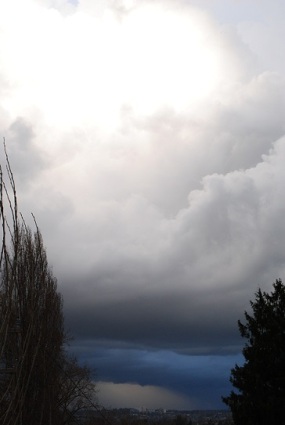
In the space of maybe a half hour, I watched the scene unfold, as slow-moving storm clouds crept westward. In the distance, I saw a dark arm reaching down from the clouds. Rain was falling over there. I hurried out to take some photos.
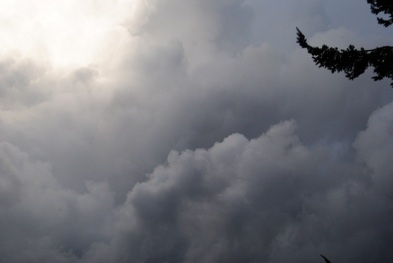
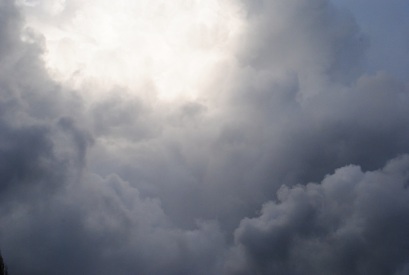
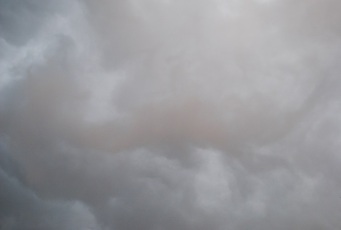
What I found so interesting was a series of cloud layers above the rain curtain. Different shades of grays, gray-blues. Slowly, the great cloud shapes morphed, colors shifted.
The dark front moved closer to my area. I saw one flash of lightning and heard one clap of thunder, but not too close. The air had become so much colder. The temperature must have dropped a lot. No rain was falling yet. The front continued on the move.
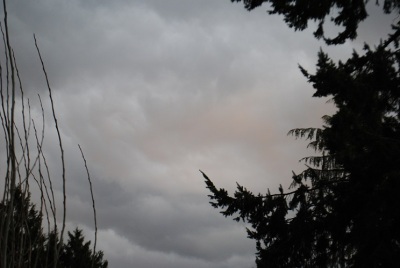
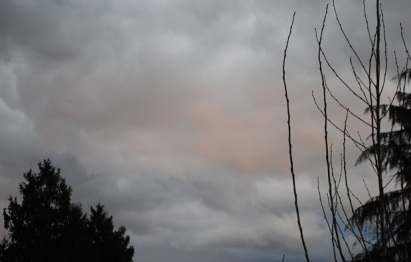
I went back indoors. But I kept watching out the window. A short time later I noticed a very subtle patch of color within the gray clouds, like an apricot color. I went out again to record it.
Somewhere to the west, a slice of late-afternoon sun must have hit the clouds. I watched as the color slowly deepened. Did anyone else see that?
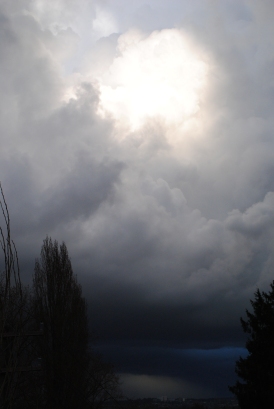
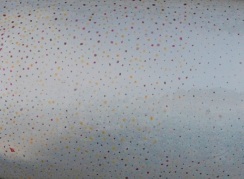
The icy air drove me back indoors, and pretty soon I started to hear tinkling against the windows. Was it sleeting? Was it hail? I couldn’t tell for sure. Usually I’d say such weird weather produces hail, but it was so tiny and it had gotten so cold, I thought it could be sleet.
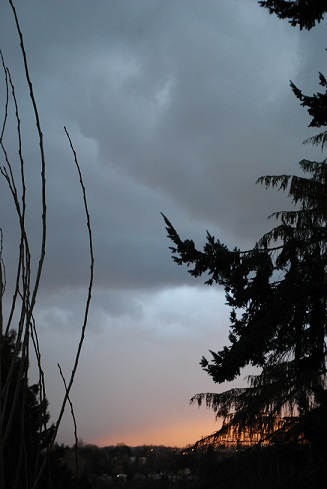
The sky was very dark, but in the distance I could see a dramatic sliver of orange beneath it.
The precipitation continued for a little while, and later on the news, I had confirmation. Hail! Mine wasn’t big enough to photograph, but I saw photos from other neighborhoods that had pea-sized hail.
I was pleased to learn that one of my photos had been published in the fall issue of Shots magazine, the quarterly journal of black & white photography. I had not caught up with all my issues.
While watching the Academy Awards, I discovered my own award! Each issue has a theme, and this one was Journey. I submitted 8 images and this one was chosen. Not only that, it graces the centerfold! I am honored.
I believe I took this photo in my front yard one summer morning. A humble snail making its way. The original is in color, but the magazine is all B&W.
We’ve all seen the horrendous news coming out of Australia about their dreadful wildfires. My thoughts went back to the month I spent in Australia in the early 1980s. For two weeks I volunteered on an Earthwatch expedition in South Australia, helping collect data for a group of American graduate students from Cornell who were studying the native flora and fauna. My team members were wonderful, diverse American women who shared an interest in wildlife and travel. One of my teammates was Sy Montgomery, who since has become an acclaimed nature writer of numerous books. At the time, we were both journalists and nature geeks, and we haven’t changed much since then. Our team was camped at Brookfield Conservation Park, which is affiliated with Chicago’s Brookfield Zoo. Our leader, Dr. Pamela Parker was a conservation biologist with the zoo then, but has been assistant director there for some time and is still very active in Australian wildlife research.
For two weeks after that I toured South Australia, New South Wales and Northern Territory. It was an incredible experience and one that will always be a fond memory.
I wrote this piece for Earthwatch’s magazine back then, but they did not use it.
So it seems timely to post this now.
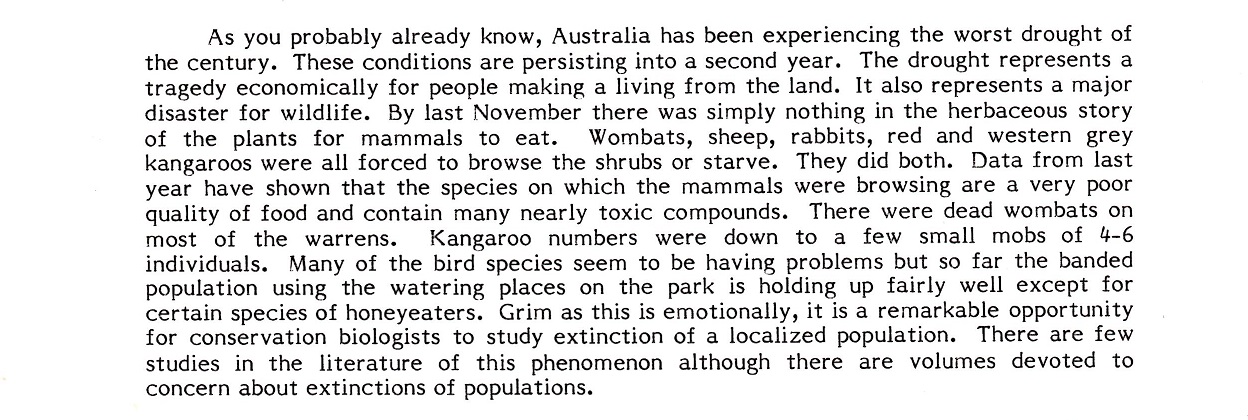
Original Earthwatch project descriptionNote from Cornell University, which was running the project, updating us Earthwatch volunteers about drought impacts
*Photos included here are from scans of my color slides and B&W negatives.
We slice through the darkness with powerful spotlights. My beam illuminates something in the distance – the yellow glint of eyes. Instantly, I sweep back to the spot. We fix our binoculars on the eyes and discover they belong to a kangaroo. Panning the beam slightly, I see there are two kangaroos, frozen briefly in the light. We spend a minute just watching the creatures grazing and moving awkwardly about. Then, we slowly drive on, searching for more animals.
Our project, “Drought Refugia,” has brought us to Brookfield Conservation Park in South Australia.
Brookfield Conservation Park
We’ve come here to study the flora and fauna, with an emphasis on the Southern hairy-nosed wombat. The park was set up as a wombat preserve, but it’s also a refuge for kangaroos and other animals. Last year’s drought had a huge impact on the ecosystems here, and plant and animals alike suffered. Spotlighting is kind of a bonus activity for us volunteers. The researchers do it to catch animal behavior that they can’t see during the day.
Tuesday
As our principal investigator, Dr. Pamela Parker, gives us a tour of the park, we pause to watch a small group of gray kangaroos, survivors of the drought.
Pam Parker with a “sleepy lizard”, AKA shingleback lizard or Tiliqua rugosa
We also feast our eyes on some beautiful birds –swift-flying mallee ring-necked parrots, raucous gray and pink galahs, and a tiny, vivid blue Splendid Fairy Wren.
Galah
Further down the park’s dirt track, we get out of the car for a close look at a wombat warren.
Here, we get our first look at results of the drought – remains of a wombat that had starved to death.
Wombat remains
Pam drives on, rattling off names of trees and shrubs we pass on the way – mallee… acacia… triodia… spinifex.
Spinifex grows in circles
“How do you spell that? How big does it grow? Does it flower? Is it good food for the animals?” Our questions are endless.
Demonstration of how quickly spinifex burnsSome of the research areaKangaroo bones
Thursday
Today, I and another volunteer are inspecting color-coded wombat warrens.
Wombat warren, a series of burrows and tunnels
We stride across the sparsely vegetated, rock-strewn landscape, going from one warren to the next. We look for signs of activity, either by wombats or other animals, like rabbits or foxes.
We search for the most important unmistakable sign of wombats – fresh fecal pellets. Finding fresh pellets is not difficult, but identifying them can be confusing.
Wombat or kangaroo?
Just when you think you’ve got them pegged as wombat, Pam tells you that female grey kangaroo pellets can resemble wombat.
So, one of the things we learn to do is break open the pellets and examine the plant fibers inside. This takes some getting used to, handling fecal pellets, but after a while our curiosity overtakes our reluctance. Wombat fecal pellets contain short, fine fibers, while kangaroo pellets have fibers of varying lengths and textures. Even Pam sometimes has trouble telling the difference, so I don’t expect to become an expert in two weeks. But my partner and I give it our best try.
Another part of our warren study is to record the number of burrows. A warren can contain anywhere from two to more than 25 burrows in its elaborate tunneling system. After our first few inspections, we learn to walk gingerly over the warrens.
Me testing the ground around the warren, so as not to fall through
More than once we’ve felt our footing suddenly give way. In many instances, we come across bones and carcasses where starving wombats finally collapsed. It’s clear that the foxes found plenty to scavenge.
Earthwatch teammates, Sy, left, and Rhoda studying a dead wombat
Saturday
The research atmosphere in the park is very relaxed. I’m a bit surprised at the research staff’s willingness to trust us with pieces of their important projects. They send us out to collect specific data: avian use of water at troughs; wombat activity; fecal pellet transects, and rabbit behavior. We plunge into our work enthusiastically, trying out our new gear – binoculars, compasses and field guides.
We get to choose what we want to do, and the work gives us some private time alone with our thoughts.
In my blind
One of the first things we learn is that “negative data is still data.” So, it’s important for us to note the absence of wildlife during our observations, as well as any activity. We have opportunities to see not only wombats, but red and grey kangaroos, lizards, echidnas, and many species of birds, including emus.
EmuGetting lunch with the staffAcacias at sunsetThe one living wild wombat we sawWally, a “pet” wombat we got to meet in Blanchetown
Saturday Night
Tonight I am spotlighting again. We go bundled against the mild winter night, standing in the open back of a four-wheel-drive vehicle, armed with spotlights in search of animals. Each of us is eager to see the wildlife that is so evasive during the day, and a little crisp night air isn’t enough to keep us glued to the campfire or in our tents. On our trip we glimpse a wombat before it disappears down a burrow. Then we spot a fox, hungrily tearing at some food, and later, a tawny frogmouth, a bird of prey.
Monday
What a lucky sight! Two emus have come to drink at the trough I’m watching.
Until now, none of the volunteers had seen any signs on them except for their flat, circular “pies.” I suspect the emus are a male and female, after checking the head coloring in the field guide. As they are drinking, the emus are making low, booming sounds. When they finish drinking, they walk off as quietly as they came.
Thursday
The vegetation research is expanding and we have a chance to record density, growth and variety of species.
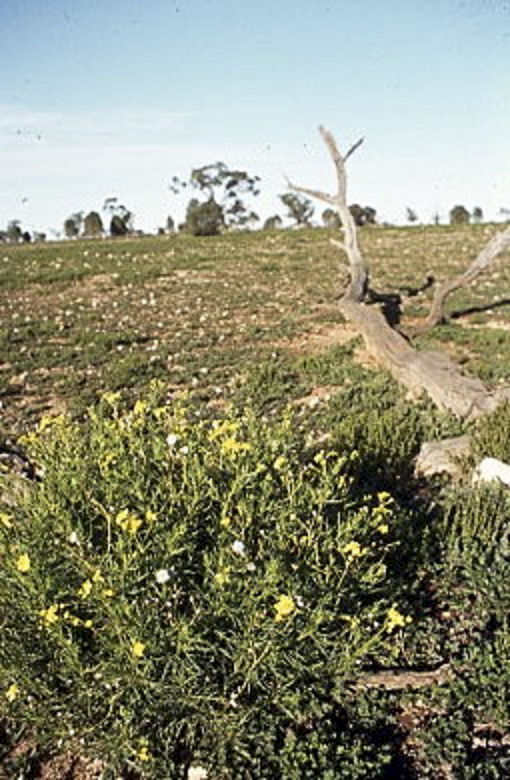
Only after getting down on my hands and knees do I discover the beauty of the microscopic flowers: candy cane-striped spears the size of toothpicks, and tiny yellow, purple and white flowers.
They all seem so fragile, I’m afraid to step anywhere. Pam says some of the plants take years to regenerate. In times of little or no rainfall, their root systems stay alive, enabling the plants to spring to life at the next rainfall. Pam has been very excited at the return of ephemeral plants and flowers, and her excitement infects us all.
More and more, we realize the devastation of the drought.
Ever-present thistle
Sunday
Brookfield Conservation Park has been a marvelous learning experience.
We’ve seen and done things no ordinary tourist ever could. The clear skies, sunsets and star-filled nights, the moaning ravens, bounding kangaroos, wombats and the warmth and patience of Dr. Parker, the research staff, and the park ranger are hard to leave behind.
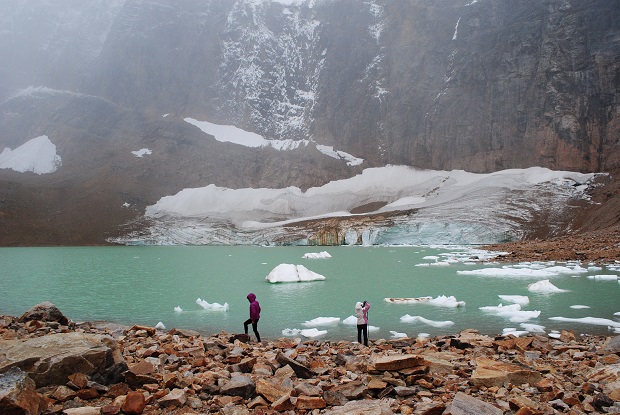
Last fall I visited Jasper National Park in Alberta, Canada. My first time in Alberta. I was excited to see the Canadian Rockies close up. The timing was perfect for glorious fall foliage. The changing elevations and landscape in the park offered a mix of seasons, first fall, then a bit of spring, then a bit of winter, and back to fall. I was well prepared with a range of clothing.
One of the popular excursions in the park is a chance to “walk” on a glacier, the Athabasca Glacier.
Athabasca Glacier
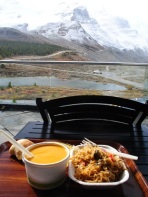
I knew it was a touristy thing to do, but how many chances do you get to do that? To reach the glacier area, I drove the Icefields Parkway, winding through the Columbia Icefields, to the visitor center. I picked a tour time and bought my ticket. Luckily I had time for a nice warming lunch before heading to the glacier.
An outside deck at the visitor center provided an ideal seat facing the mountains and glacier. And, the sun added the perfect touch.
It reminded me of when I visited Switzerland, gazing at the alps on a sunny winter day, from a dry and snowless path. It didn’t seem right.
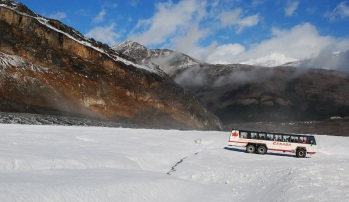
A bus heads up to the snow coach
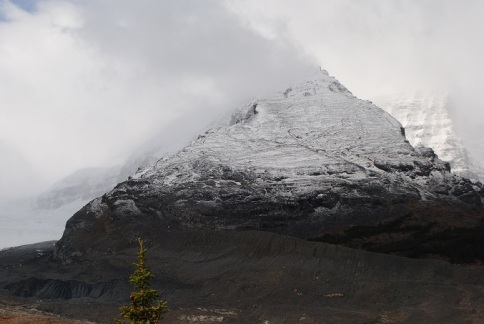
As the time for my bus ride to the foot of the glacier approached, the sky closed in and a sudden snow squall let loose!
No doubt, this was the coldest, snowiest part of the park. I enjoyed the view going up the slope to where we would transfer to the giant snow coaches.
We climbed aboard. We could see the glacier.
The glacier, through the snow coach window
The coaches are well-equipped for moving over snow. Moving is a relative term. Crawling is more like it. As one goes up the snow-packed road, one is likely going back down. We pause to let one go by. The stream of tourists proceeds on schedule every day.
View from our snow coach
I had every confidence in our driver to keep us safely on the road. His job seemed a little treacherous, but to him it may have been just another day at work.
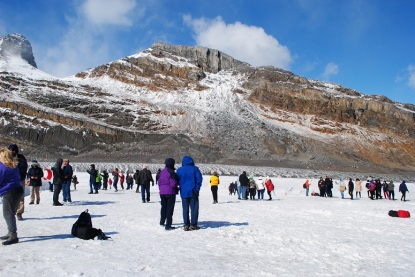
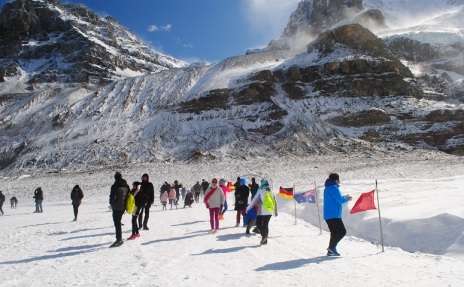
When we arrived at the parking area, the snow passed, the sky cleared and the sun came out. There were a couple other coaches and groups of travelers already scattered across the ice. Some were posing, some lying on the ice or otherwise frolicking.
Though it was sunny, it was quite windy on the glacier. I noted the various state of dress of the visitors.
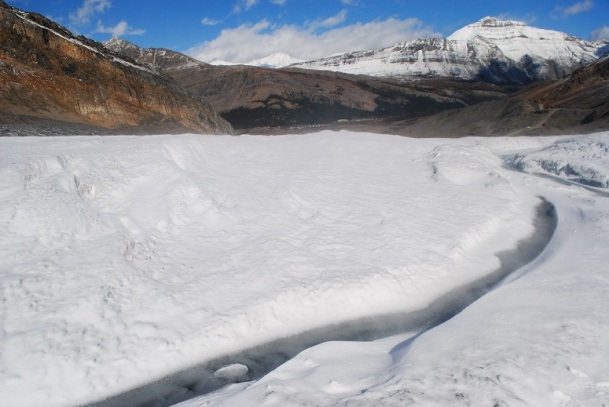
Most were well prepared, but some, I thought, had to be beyond freezing. With a cover of snow, the ice still posed dangers. I walked gingerly. We had to stay within the specific area that was deemed safe.
The scene was a mix of international visitors, a good match for the row of flags of all nations that whipped in the gusts.
For a brief time, it was like there were no countries. Just us, the ice and snow, frozen in time. The scene took my mind to Antarctica. I know there are similar flags there too, whipping in similar winds, in a similarly frigid white landscape.
It was perhaps odd to see such unnatural bright colors in the arctic-like landscape. It brought us back to our individual national identities. Like the other visitors, I finally found my country’s flag. It didn’t feel like anything special. It was simply a curiosity, a photo opp. After all, it wasn’t the pole. It was Canada.
Textures
Having had enough time to take it all in, we boarded our snow coaches for the slow journey back to the bus.
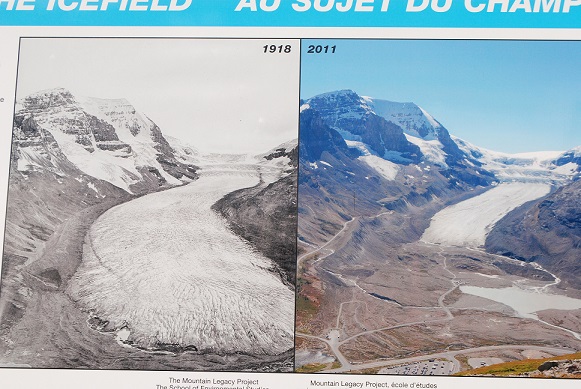
I was glad for the experience. I was glad to have seen, touched and walked on something that is, in fact, going away.
Sometime after my liftetime it will cease to exist.
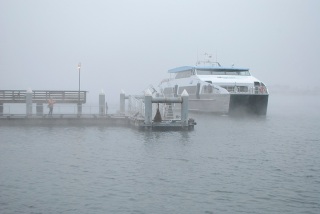
Fog is a frequent visitor to Seattle and I usually enjoy it. Sometimes I take my camera and dash out before the fog begins to lift. On a recent December morning, I awoke to find pea-soup fog obscuring the view.
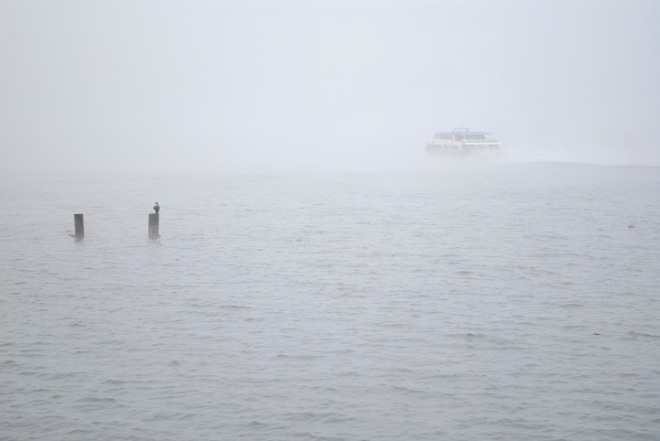
I decided to go down by the water, across from the downtown skyline. Only, this morning, there was no skyline! Imagine how it would appear, looking across Puget Sound to where the city is – or used to be!
The scene reminded me of a fond memory of taking a Zodiac in Scotland across a bay to the Isle of May. We started out in thick fog. We could not even see the island. But as we neared the island, the fog lifted and there it was.
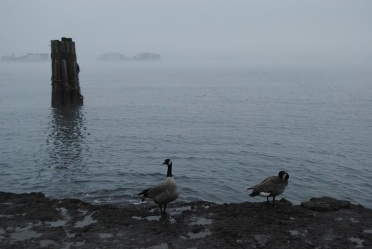
Back to the foggy day in Seattle. It was a quiet, damp and chilly morning. Along with the fog, frost had covered some surfaces overnight. Shades of gray stitched together land and sea, with puffs of fog occasionally floating over the water.
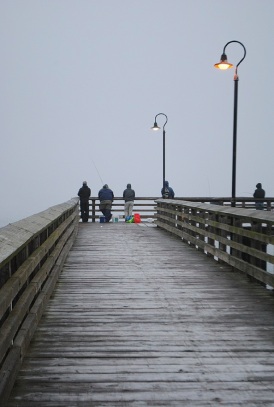
A few distant lights broke through along the docks.
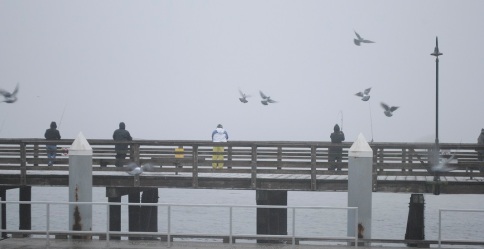
The only signs of life included a few cormorants, geese, and pigeons.
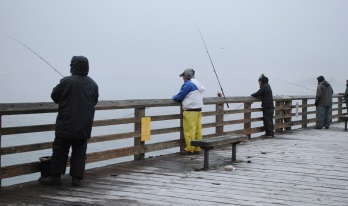
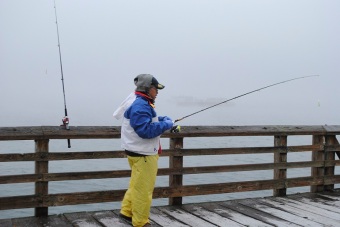
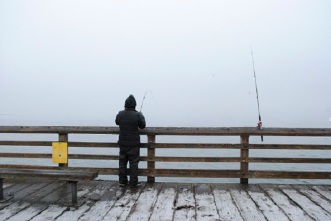
Humans included several determined anglers lined up on the dock, intent on hooking squid, and a few people boarding the Water Taxi for the commute over the water to the disappeared city.
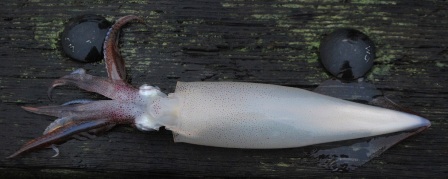
I took a close look at one squid pulled out by an angler and placed on a bench. It was exquisite, still wriggling and struggling to live.
Its skin was surprisingly colorful and pearly, sprinkled with tiny colorful spots like confetti.
I could not imagine killing and eating these intelligent fascinating creatures, especially out of that heavily used port. But the fishermen were happily loading their buckets.
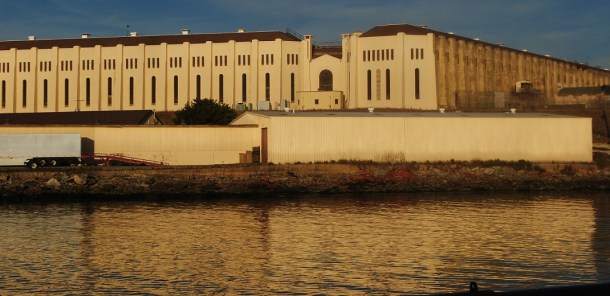
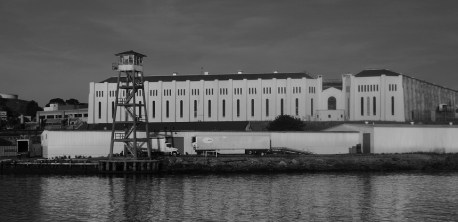
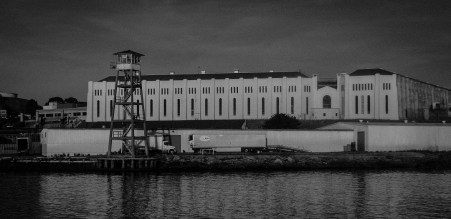
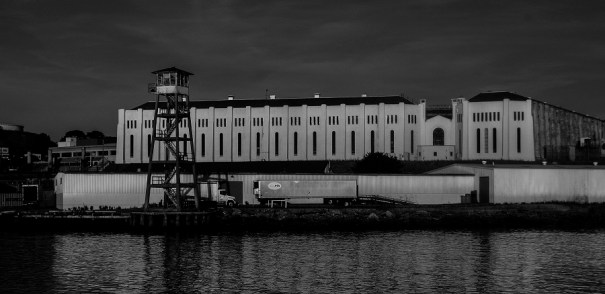
I got to see it recently while taking a ferry from Marin County to San Francisco. There it was, silently glowing gold in the late afternoon sun, with a guard tower nearby. Just a simple building at the edge of the water. There was no one outside that I could see. I had to imagine those inside.
With only water between us, I almost got a chill seeing San Quentin State Prison in real life. After all, it’s the stuff of 1940s black and white movies, in which gangsters get their due in the end. I immediately had a vision of Humphrey Bogart, dressed in shades of gray, with his classic sneer and heavy five o’clock shadow.
Among those sent there are all men who have received the death sentence in California. There have been executions in the past, but none have taken place since 2006. In 2019, the governor ordered a moratorium on executions. Almost 700 men remain on “death row.”
The maximum security prison opened in 1852 and is the oldest in California. Pretty tough to escape from there, eh? Some have tried, but no one has ever successfully fled the prison.
Oddly, the tough prison has served as a setting for numerous films and concerts. Johnny Cash performed for prisoners twice, once with inmate Merle Haggard in the audience. B.B. King and Metallica later performed there.
Bogart was indeed tied to San Quentin: he played an escapee in the 1947 film “Dark Passage.” Several other movies used the facility, including Woody Allen’s “Take the Money and Run.”
The prison has evolved somewhat since it opened. There are now programs to rehabilitate prisoners who are able to be released, and they do have access to exercise, education and entertainment. But for me, San Quentin will always be that cold, concrete place swathed in black and white, where the baddest of the bad simmer inside.
I looked at my calendar to see when the full moon was this month and, bam, there it was. Friday the 13th!
What could this possibly mean? Has this ever occurred before? I had to see what the soothsayers said about it, or “seers” as the priestesses in Marion Zimmer Bradley’s books are called. I happen to be reading about the priestesses of Avalon.
The Harvest Moon of September 2019 will occur just as the days morph from the 13th to 14th, shortly after midnight on the east coast. But for the rest of us, it will still be the 13th. This phenomenon has happened before, but it’s generally uncommon.
Smaller Yet Powerful Moon
Astronomers say the moon will appear somewhat smaller this month because it’s at its farthest point from earth – apogee. No matter. This “micromoon” will still send full-moon energy. A full moon is the ending of a particular cycle, and marks the beginning of a new one.
Full moons are usually known as times when emotions can go awry. People get crazy, wolves howl, werewolves go abroad. Pair that with an equally freaky day, Friday the 13th, and let the games begin!
One “seer” notes that this full moon will rise in the constellation Phoenix, a powerful symbol of rebirth. However, it is tempered with a host of astrological arrangements.
“Jupiter square Neptune” can foster unpleasant things like trusting too much, falling prey to scams, and suffering losses or disappointments. The position with Mars can bring moodiness, anger, delusion and impulsiveness. But while “full moon conjunct Neptune” brings confusion and deception, Neptune rules hopes, dreams and spirituality, and the position of Pluto, our poor little downgraded orb, contributes positive energy for rebirth and moving on from destructive behaviors and emotional baggage.
Just Ancient Superstitions?
The number 13 has long been considered unlucky, so it follows that the 13th day would also be unlucky. And for some, the 13th falling on a Friday is especially worrisome.
The fear of this number is called triskaidekaphobia. Superstitious people generally avoid walking under ladders and spilling salt. Other taboos are opening an umbrella in the house and putting shoes on the table, both things my mother forbade! Even hotels don’t have 13th floors, most buildings don’t have one, and most elevators do not go to a 13th floor! Would you live or work on the 13th floor?
According to some historians, “Western cultures have historically associated the number 12 with completeness (12 days of Christmas, 12 months and zodiac signs, 12 labors of Hercules, 12 gods of Olympus and 12 tribes of Israel, just to name a few).”
On the other hand, the number 13 is odd and therefore bestowed with incomplete qualities and has not been so celebrated. It is said that the ancient Code of Hammurabi omitted a 13th law from its list of legal rules. This may have been simply a clerical error.
Furthermore, the seating arrangement at the Last Supper has led to a longstanding Christian superstition that having 13 guests at a table was a bad omen. The day following the Last Supper was a Friday. Many superstitions seem to arise from religious beliefs or events, while others appear linked to practical considerations.
But not everyone subscribes to these notions. In the late 19th century a New Yorker even created an exclusive club called, what else, The Thirteen Club. He thumbed his nose at all the myths surrounding the number, and invited 12 other men to join. They met on the 13th day of each month, in room number 13, and dined on 13 courses. Apparently, they all dodged bad luck.
Are you willing to test it? Go ahead, walk under a ladder, pet that black cat, and spill some salt! I dare you!
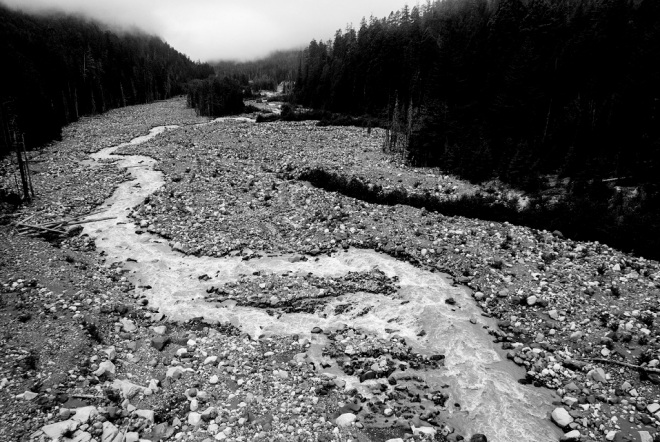
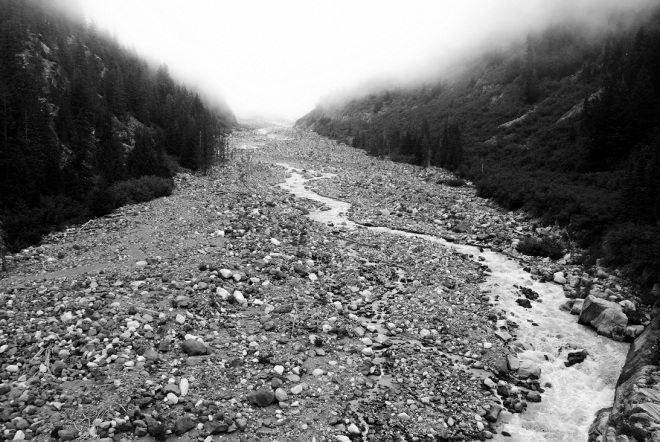
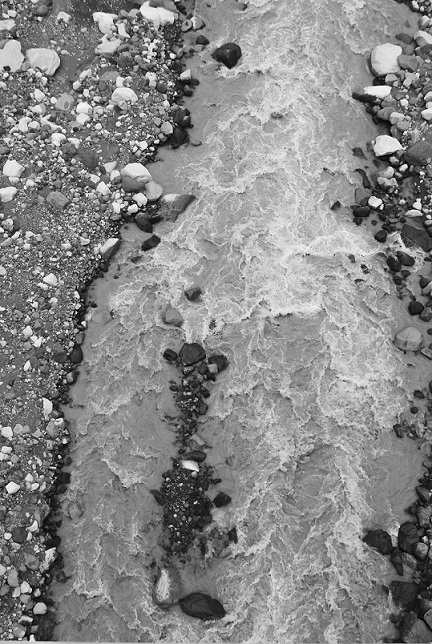
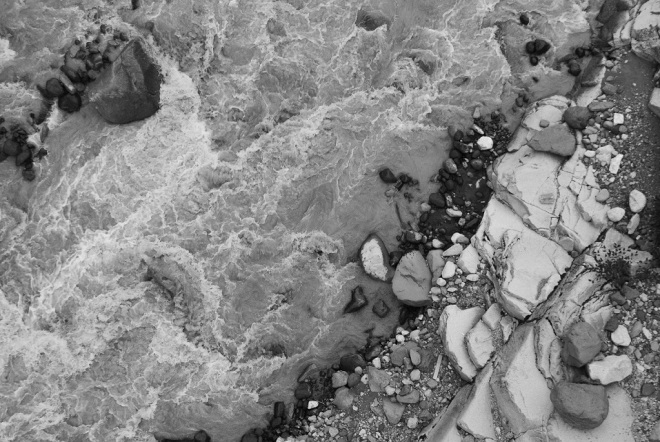
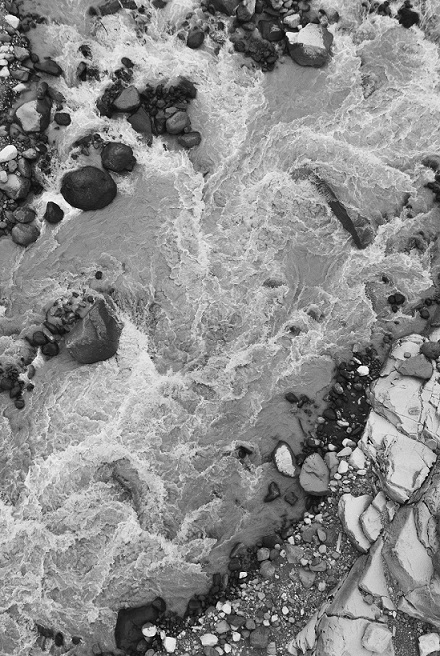
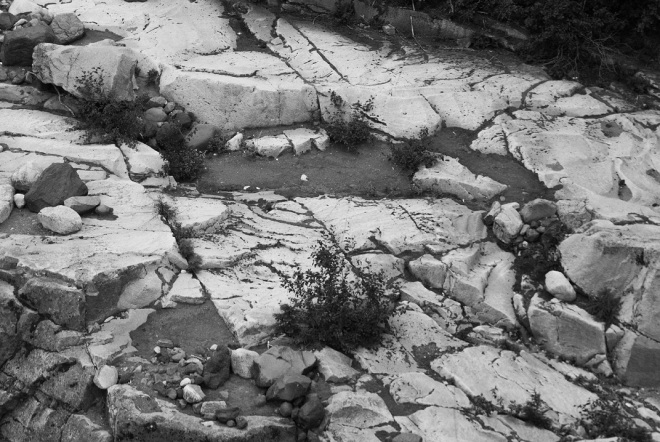
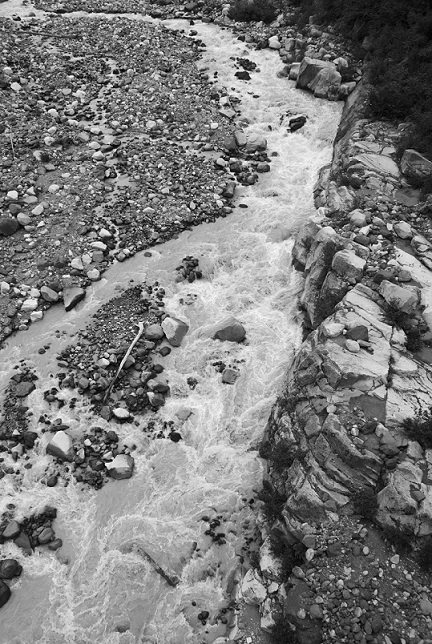
On a recent day that began very overcast, I visited Mount Rainier National Park. There are several rivers in the park, and the Nisqually is one of them.
Here it is a very narrow, shallow ribbon cutting through a rocky bed. You can see the low clouds over the valley.
These were shot in color, but I have converted them to black & white, to focus on the patterns in the water and colors and patterns in the rocks.
The tone of the water reminds me of chocolate milk.
These views were shot from a bridge over the river.
Last June, I roamed the shores of Puget Sound during a super low tide. I spent my time on the harbor side of West Seattle, facing downtown. The scene was memorable and photogenic, with blue sky and white clouds, reflections in pools of water.
This year I decided not to try to repeat those images and instead chose to experience the lowest tide around the bend to the south, where people go to look for marine life and volunteer beach naturalists are present to identify creatures.
I guess it’s the moon phase and summer tilt of the earth that produces these low tides. Lucky for us, that’s a better time to explore near the water’s edge than winter!
During these super low tides, I’d say the tide goes out at least twice as far as it usually does, if not more. This is when Mother Nature reveals the hidden world that exists beneath the sea, and hordes of people young and old come out to witness the spectacle.
Hidden Treasures
I went down for a -3.4 ft. tide, and saw some exciting creatures. For the first time, I found a small fish, a gunnel.
Gunnels are long and narrow, similar to eels. This one was a saddleback gunnel, Pholis ornate, about four inches long, though they can get to about 11 inches long.
I learned that they are found close to shore areas, on mud bottoms among eelgrass and seaweed, and that they feed on small mollusks and crustaceans. The pattern on its skin made me think of a snake.
I searched for and found several chitons clinging to rocks, though their lovely shell shapes and patterns were completely obscured by coats of seaweed. A stunning find was a “gumboot” chiton, Cryptochitonstelleri, which reminded me of shelf fungi I see growing on logs.
If it grew above ground, you’d easily mistake it for fungus. Someone had spotted it way under a rock and asked a volunteer what it was. It was huge, as far as any chitons I have seen. In fact, it is the largest chiton in the world, reaching up to 13 inches in length. It has a reddish leathery exterior that covers its shell plates, unlike smaller chitons. How lucky was I to see it!
There were plenty of anemones, with the large bright reddish ones screaming for attention. They come in many shapes and sizes.
If you were going to make a horror film with sea creatures, anemones would surely be the stars. Remember the movie, The Blob? Exactly. With their slime-like glistening amorphous bodies, they stick to rocks and seem to ooze down to the ground.
Anemone, left, and sea cucumber
The larger ones take on these stretchy shapes, while the smaller species are circular masses that can be easily overlooked among the wet sand.
Stars and Cucumbers
Also looking soft and squishy were the many bright orange sea cucumbers. They are not large, but easy to spot.
Sea cucumber
Another orange creature was the delicate looking blood star, Henricia leviuscula, with its narrow rays. It was much smaller than the beefy brown mottled sea star, Evasterias troschelli. This guy eats clams, shells, snails, chitons, barnacles and sea squirts.
Blood starMottled sea star and anemone
Nudibranchs are among the most colorful of undersea creatures. Although the magnificent Opalescent sea slug can be found in Puget Sound, on this day, all we saw were bland beige ones of the genus Doris. They were like big flat worms.
There are many kinds of sea weed along the shore, and one visitor even sampled one!
Sea weed and shell
With all the commercial tanker traffic, ferries and other vessels, I’m not sure I’d eat anything from that particular body of water.
Some sea weed reminded me of tire tracks.
Always my favorite, a moon snail clung inside its beautiful shell. These gastropods have been called “voracious predators” of clams.
Moon snail and egg case
The snail envelopes the clam with its big foot and then drills a hole in the clam shell. Through the hole, it slowly sucks out the clam.















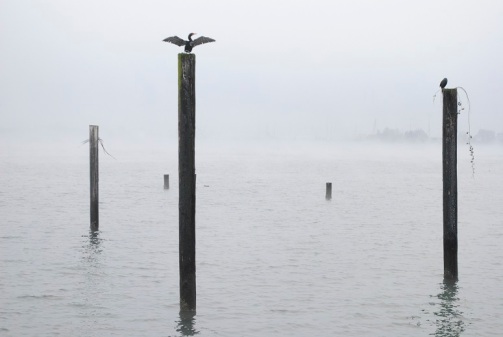
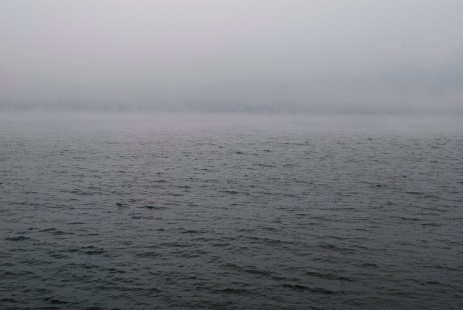
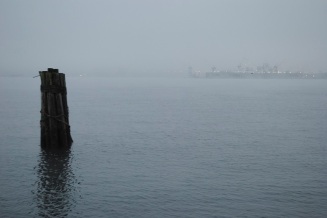 he foggy day in Seattle. It was a quiet, damp and chilly morning. Along with the fog, frost had covered some surfaces overnight. Shades of gray stitched together land and sea, with puffs of fog occasionally floating over the water.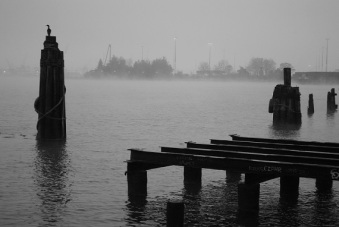

 No matter. This “micromoon” will still send full-moon energy. A full moon is the ending of a particular cycle, and marks the beginning of a new one.
 But while “full moon conjunct Neptune” brings confusion and deception, Neptune rules hopes, dreams and spirituality, and the position of Pluto, our poor little downgraded orb, contributes positive energy for rebirth and moving on from destructive behaviors and emotional baggage.
 Other taboos are opening an umbrella in the house and putting shoes on the table, both things my mother forbade! Even hotels don’t have 13th floors, most buildings don’t have one, and most elevators do not go to a 13th floor! Would you live or work on the 13th floor?
 But not everyone subscribes to these notions. In the late 19th century a New Yorker even created an exclusive club called, what else, The Thirteen Club. He thumbed his nose at all the myths surrounding the number, and invited 12 other men to join. They met on the 13th day of each month, in room number 13, and dined on 13 courses. Apparently, they all dodged bad luck.


 Natural Views