The Rabbit that Wasn’t

One thing I never expected to see in Newfoundland was a snowshoe hare. It wasn’t even on my radar. Instead, my hopes hung on seeing an iceberg or two, puffins and other cool birds, moose, and maybe some whales.

But rabbits, rather hares, weren’t even a blip. You might lump them together generally calling them rabbits, but they share only their family, Leporidae, while hares are classified in the genus Lepus, and cottontail rabbits are in Sylvilagus.

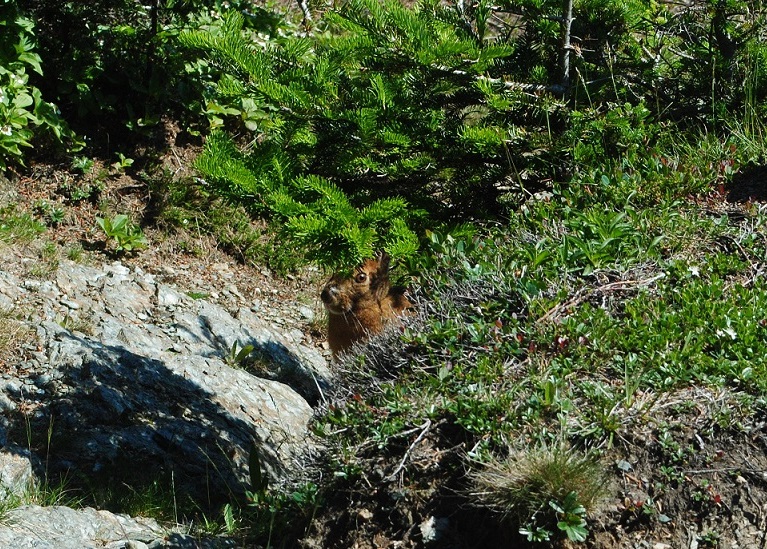
I’ve seen cottontail rabbits and jackrabbits, which are more akin to the hares, but never in my life imagined I’d see a snowshoe hare. In my mind, they are pure white in winter and live way up north in the Arctic. But here in Newfoundland, way south of there, was a large brown rabbit, appearing just outside its safe vegetated area.
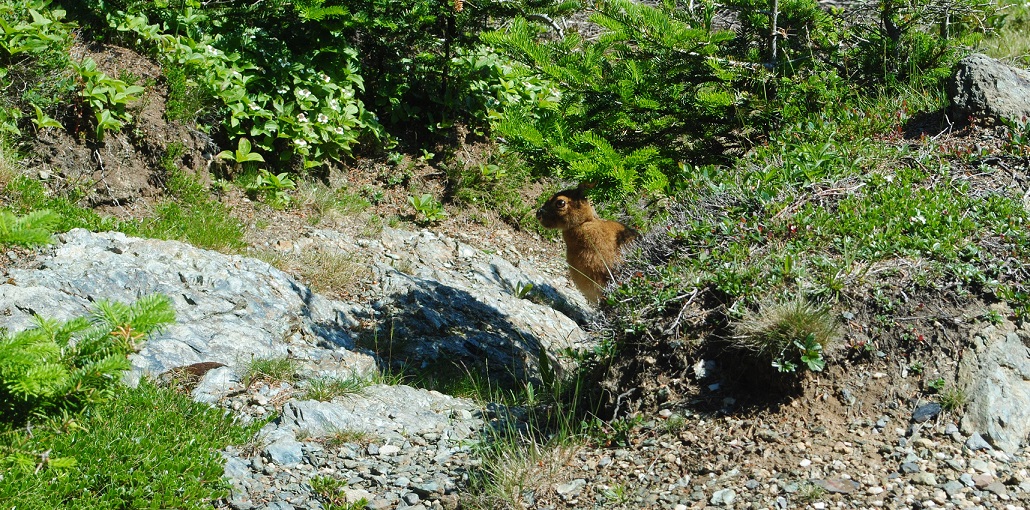
As we were walking a trail behind a lighthouse, my friend called “snowshoe hare.” We froze and looked. I was skeptical, “What? No way.” He insisted and we looked harder. It was large, and seemed to have longer ears. But how could it be here? They were the stuff, along with penguins and polar bears, of picture books I’d see as a child, things I’d never see in my life.
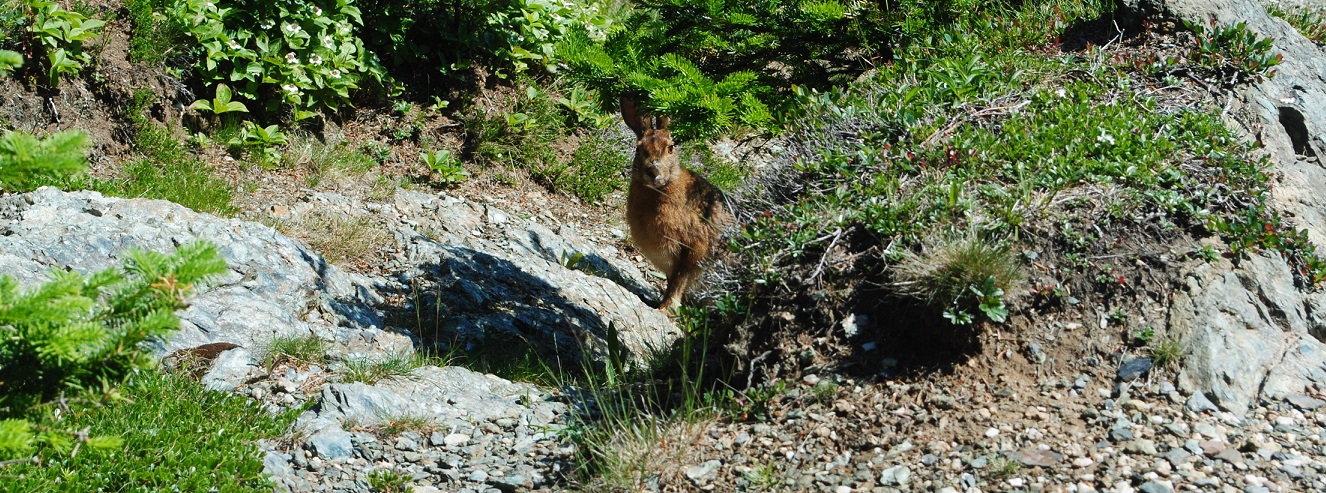
It turns out he was right. I did some quick research and discovered that snowshoe hares have a huge range, which includes all of Canada, Alaska and mountainous areas of the lower 48. Boreal forests are very important to their survival. I was thinking of arctic hares, which truly live way up in the north and do not normally overlap with snowshoes, and are even larger than snowshoes.

The latter gets its name from its large feet, which help it navigate on deep snows. They are brown in summer, living in forested areas and munching on vegetation. Winter brings the change in coat to pure white, for camouflage from predators.
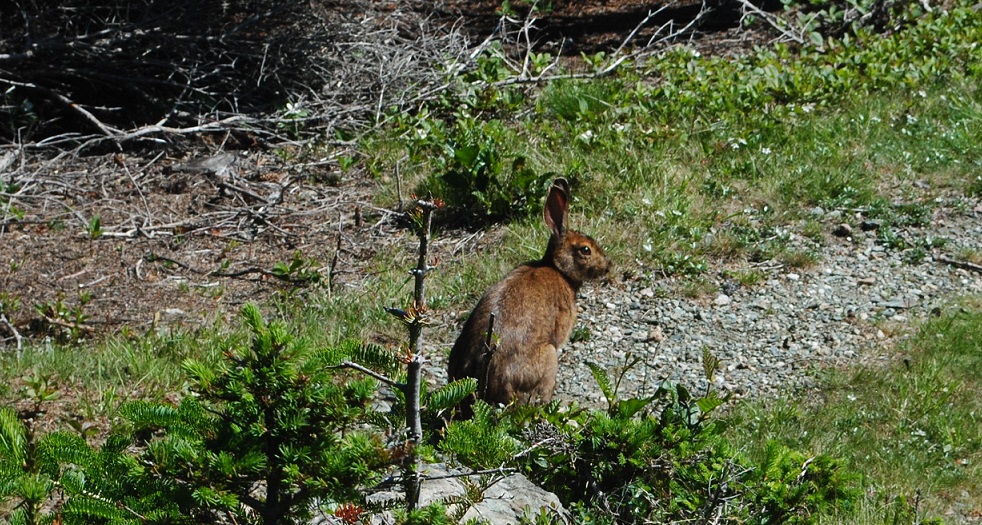
We watched our hare for a bit, until it retreated back into the wooded area.

I’ll always remember my one and only snowshoe hare.
A Walk on a Glacier

DSC_0546
Edith Cavell Glacier

Last fall I visited Jasper National Park in Alberta, Canada. My first time in Alberta. I was excited to see the Canadian Rockies close up. The timing was perfect for glorious fall foliage. The changing elevations and landscape in the park offered a mix of seasons, first fall, then a bit of spring, then a bit of winter, and back to fall. I was well prepared with a range of clothing.

One of the popular excursions in the park is a chance to “walk” on a glacier, the Athabasca Glacier.

DSC_0397
Athabasca Glacier

I knew it was a touristy thing to do, but how many chances do you get to do that? To reach the glacier area, I drove the Icefields Parkway, winding through the Columbia Icefields, to the visitor center. I picked a tour time and bought my ticket. Luckily I had time for a nice warming lunch before heading to the glacier. DSC_0400 - Copy

An outside deck at the visitor center provided an ideal seat facing the mountains and glacier. And, the sun added the perfect touch.

It reminded me of when I visited Switzerland, gazing at the alps on a sunny winter day, from a dry and snowless path. It didn’t seem right.

DSC_0398
A bus heads up to the snow coach

As the time for my bus ride to the foot of the glacier approached, the sky closed in and a sudden snow squall let loose!

DSC_0399

No doubt, this was the coldest, snowiest part of the park. I enjoyed the view going up the slope to where we would transfer to the giant snow coaches.

We climbed aboard. We could see the glacier.

DSC_0407
The glacier, through the snow coach window

The coaches are well-equipped for moving over snow. Moving is a relative term. Crawling is more like it. As one goes up the snow-packed road, one is likely going back down. We pause to let one go by. The stream of tourists proceeds on schedule every day.

DSC_0411 - Copy
View from our snow coach

I had every confidence in our driver to keep us safely on the road. His job seemed a little treacherous, but to him it may have been just another day at work.

When we arrived at the parking area, the snow passed, the sky cleared and the sun came out. There were a couple other coaches and groups of travelers already scattered across the ice. Some were posing, some lying on the ice or otherwise frolicking.

DSC_0412 - Copy


DSC_0442

Though it was sunny, it was quite windy on the glacier. I noted the various state of dress of the visitors.

DSC_0439

Most were well prepared, but some, I thought, had to be beyond freezing. With a cover of snow, the ice still posed dangers. I walked gingerly. We had to stay within the specific area that was deemed safe.

The scene was a mix of international visitors, a good match for the row of flags of all nations that whipped in the gusts.

For a brief time, it was like there were no countries. Just us, the ice and snow, frozen in time. The scene took my mind to Antarctica. I know there are similar flags there too, whipping in similar winds, in a similarly frigid white landscape. DSC_0425

DSC_0431

It was perhaps odd to see such unnatural bright colors in the arctic-like landscape. It brought us back to our individual national identities.  Like the other visitors, I finally found my country’s flag. It didn’t feel like anything special. It was simply a curiosity, a photo opp. After all, it wasn’t the pole. It was Canada.

DSC_0437

DSC_0447

Textures

DSC_0449

DSC_0451

DSC_0415

Having had enough time to take it all in, we boarded our snow coaches for the slow journey back to the bus.

I was glad for the experience. I was glad to have seen, touched and walked on something that is, in fact, going away.

DSC_0452

Sometime after my liftetime it will cease to exist.

Photos Don’t Lie

DSC_0394
Historic comparison of Athabasca Glacier