Serendipity?

A message of hope? A forgotten treasure?

I am reading E.O. Wilson’s Half-Earth, his third in a series about our planet’s human and natural history. It is a sobering account of what humans have done, and a strident plea for a last-ditch effort to save all life on earth. His treatise says we must put aside one half of the earth’s landscape in order to support enough biodiversity for life to go on. He is a voice of reason, fact and hope, but I find it difficult to believe that the majority of human beings will care enough to actually do that.

Overcome by the printed matter and the state of global politics, I had a good cry.

Then I turned the page. There was something greenish near the top of the text, maybe an illustration? I touched it and it moved. No, it was not printed. It was left by a previous borrower of this library edition. Pressed flat and preserved for me to find.

A four-leaf clover?

It stopped me in my tracks. Was this left for the next reader, to nudge me out of my gloom and doom? “All hope is not lost,” it seemed to say. Wilson himself writes that there is still time for us to achieve his vision, if we act quickly.

Should I keep the clover, or leave it for the next reader? I will leave it.

There are forces at work here that I can’t explain.
Textures and Tones

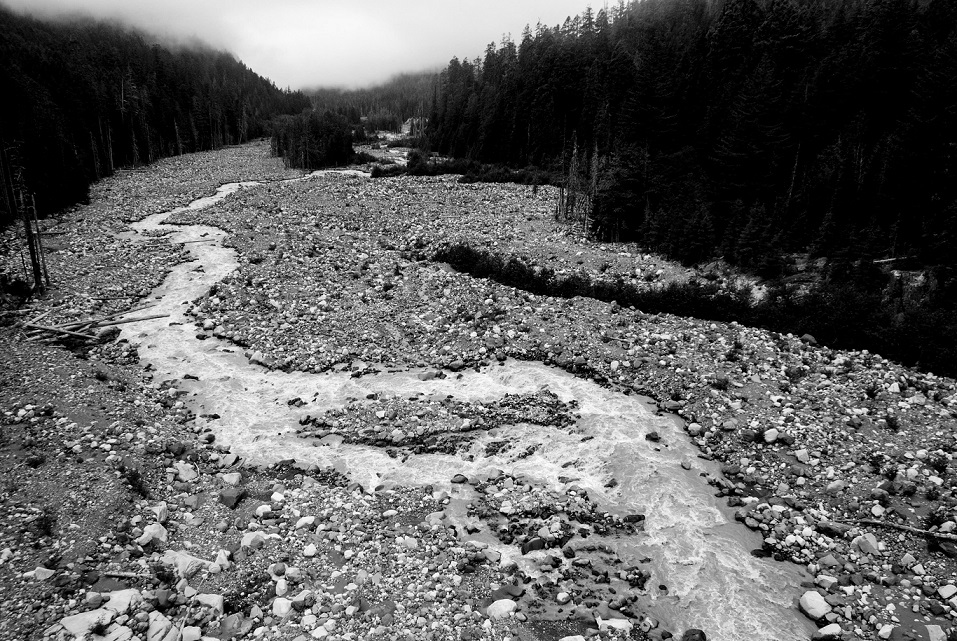
On a recent day that began very overcast, I visited Mount Rainier National Park. There are several rivers in the park, and the Nisqually is one of them.

river1

Here it is a very narrow, shallow ribbon cutting through a rocky bed. You can see the low clouds over the valley.

river2

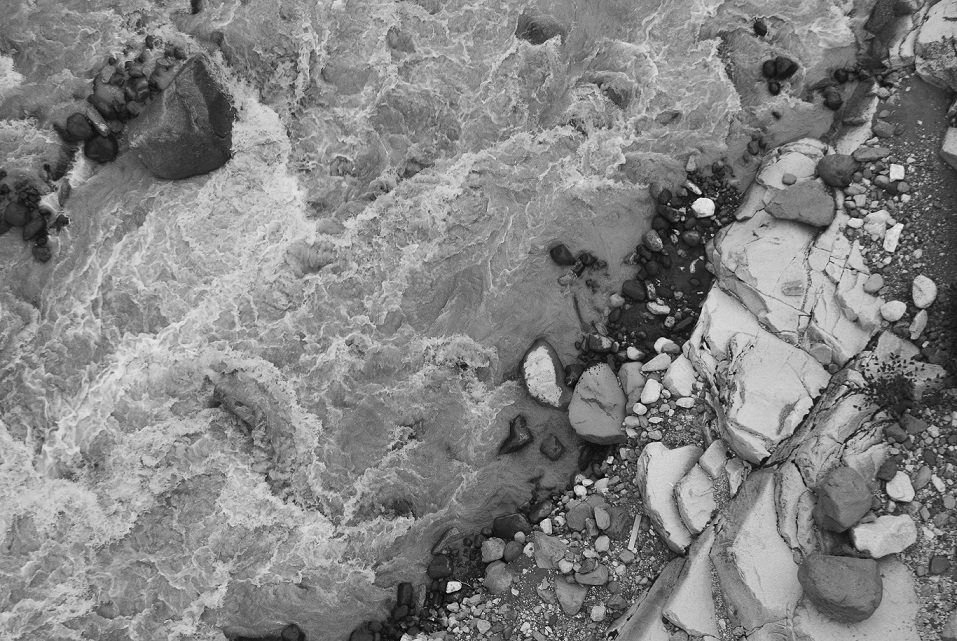
These were shot in color, but I have converted them to black & white, to focus on the patterns in the water and colors and patterns in the rocks.

river6

The tone of the water reminds me of chocolate milk.

These views were shot from a bridge over the river.

river4

river5


rocksriver3

Full Blood Moon, Buck Moon, Here Comes an Eclipse!

Today’s superstar is the full moon, and this one is being hailed as the longest lunar eclipse of the century!

That’s a lot of hype. Sadly, the eclipse won’t be visible in the United States, because it takes place during daylight here. But it should be exciting for people in Africa, Asia, Australia, Europe and South America, who should see a reddish moon.

That’s where the name Blood Moon comes in. Any moon in eclipse typically looks reddish, so it’s always called a Blood Moon.

The July full moon is also called the Buck Moon, referring to the time that deer start to shed their antlers. Other names for the July moon are Thunder Moon and Hay Moon.

Whatever we call it, our moon is deeply tied to our rhythms and cultures on earth.