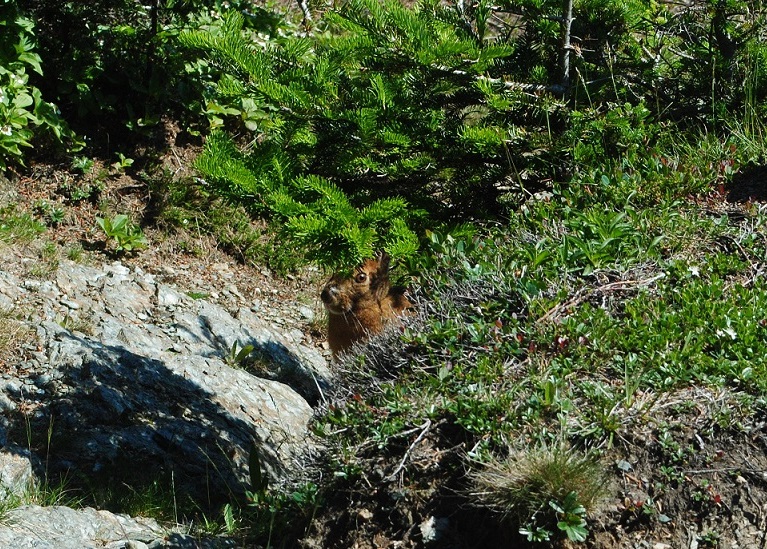
One thing I never expected to see in Newfoundland was a snowshoe hare. It wasn’t even on my radar. Instead, my hopes hung on seeing an iceberg or two, puffins and other cool birds, moose, and maybe some whales.
But rabbits, rather hares, weren’t even a blip. You might lump them together generally calling them rabbits, but they share only their family, Leporidae, while hares are classified in the genus Lepus, and cottontail rabbits are in Sylvilagus.
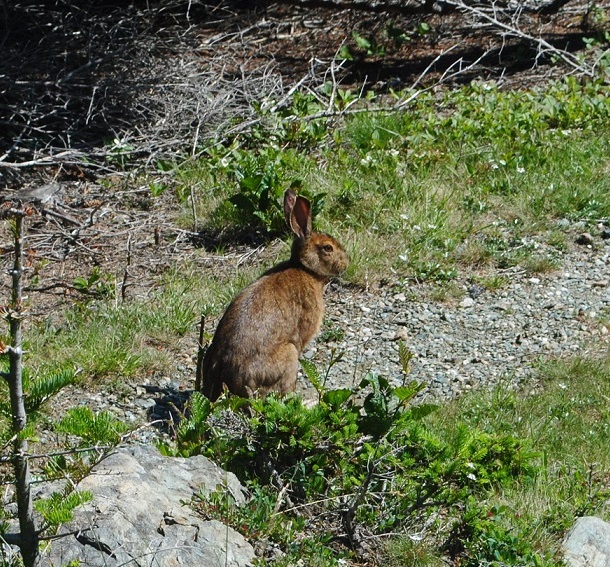
I’ve seen cottontail rabbits and jackrabbits, which are more akin to the hares, but never in my life imagined I’d see a snowshoe hare. In my mind, they are pure white in winter and live way up north in the Arctic. But here in Newfoundland, way south of there, was a large brown rabbit, appearing just outside its safe vegetated area.
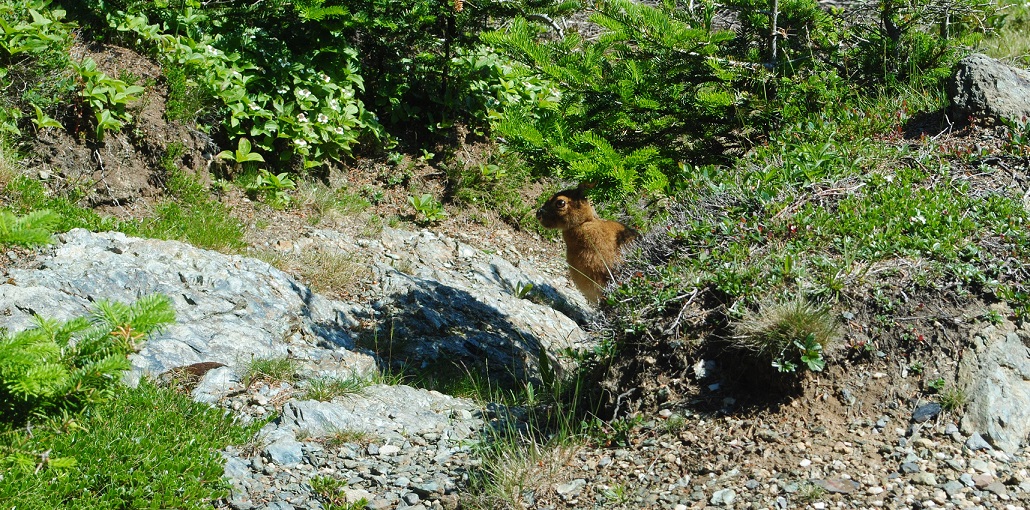
As we were walking a trail behind a lighthouse, my friend called “snowshoe hare.” We froze and looked. I was skeptical, “What? No way.” He insisted and we looked harder. It was large, and seemed to have longer ears. But how could it be here? They were the stuff, along with penguins and polar bears, of picture books I’d see as a child, things I’d never see in my life.
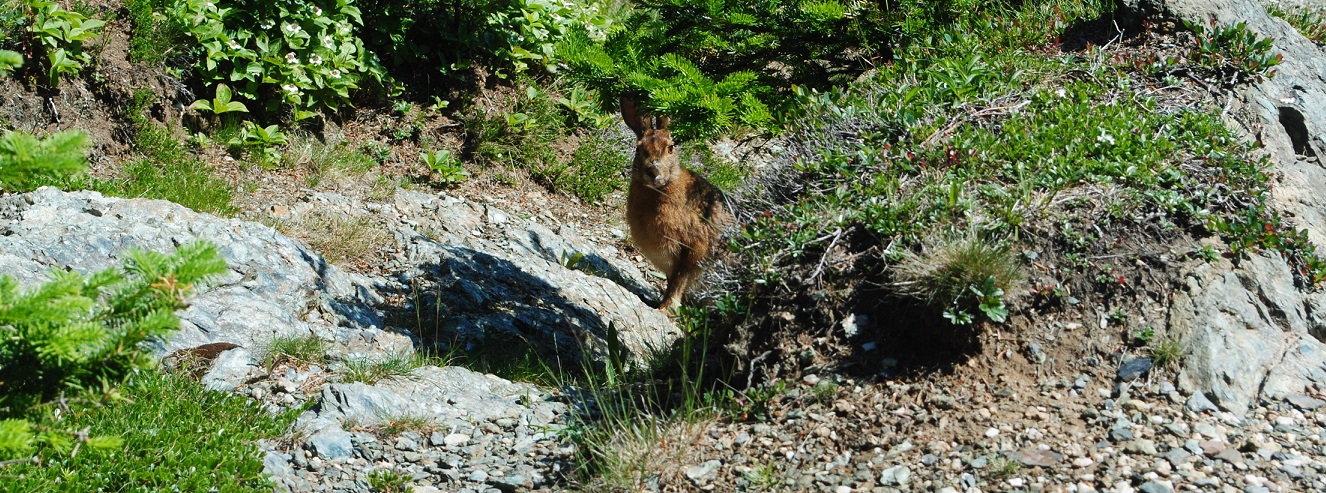
It turns out he was right. I did some quick research and discovered that snowshoe hares have a huge range, which includes all of Canada, Alaska and mountainous areas of the lower 48. Boreal forests are very important to their survival. I was thinking of arctic hares, which truly live way up in the north and do not normally overlap with snowshoes, and are even larger than snowshoes.
The latter gets its name from its large feet, which help it navigate on deep snows. They are brown in summer, living in forested areas and munching on vegetation. Winter brings the change in coat to pure white, for camouflage from predators.
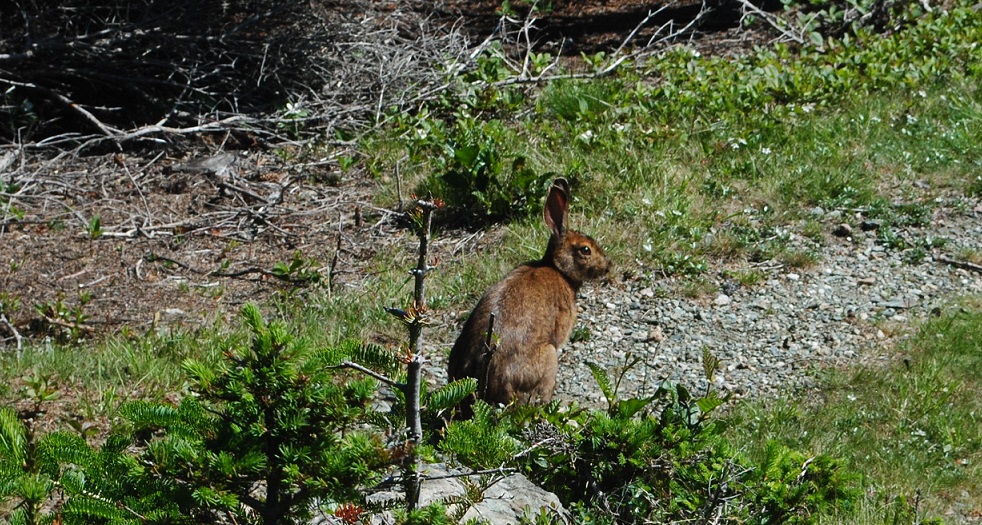
We watched our hare for a bit, until it retreated back into the wooded area.
I’ll always remember my one and only snowshoe hare.


Congratulations on seeing this gorgeous creature, and I also love this article!
Great writing voice you employ here, and I appreciate the facts you wove in.
An interesting fact which sticks out for me is how the boreal forests factor in.
A beautiful creature for sure… How nice that one of your traveling companions spotted it, and I am glad for you that you had the opportunity to see it.
LikeLike
Thanks for the lovely comments. I’m glad you liked the post and learned something about snowshoe hares! It’s a small thing, likely overlooked by most visitors. But I think because we were birders, and really naturalists in general, we look at and for anything, birds, insects, plants, animals. So the hare was spotted, very unexpectedly, and we enjoyed seeing it.
LikeLike
Yes, David and I are very similar, we try to catch glimpses of “all creatures great and small.” So I was going to talk about the very sweet-looking scrub hare whom we saw in S. Africa — but very sadly, he/she met his/her demise at the hands of an adult cheetah who was also hunting for her two cubs. We were out in the veld. Not cheery… Predator and predated, of course…
LikeLike