In the Realm of Druids and Faeries

steps1This is the cool, wet time of year when moss is at its best. Its emerald plumpness proclaims, “Look at me. My hyper green greenness demands that you see me.”

Against the grayest of gray days and the most muted tones of fallen logs and decaying leaves, moss paints the landscape with exuberant signs of life.

All green was vanished save of pine and yew, That still displayed their melancholy hue; Save the green holly with its berries red, And the green moss that o’er the gravel spread.

―George Crabbe

I like moss. Moss in my yard, moss on trees, moss on concrete, moss on brick. It drapes the concrete under my fencing. I invite it to spread across my yard, replacing the useless grass at every inch. I’ve gotten rid of most of my front lawn, instead having vegetable plots, a pollinator garden and drought-tolerant shrubs and natives. My yard is a wildlife sanctuary.

There is some moss on the ground, but I’d like more. It would save me from mowing or using mulch around my plantings.

steps2
Did ancient Romans climb these steps? (Camp Long)

Often overlooked or undervalued by the casual observer, mosses do serve important functions in nature. Classified as bryophytes, mosses help stabilize the soil, reduce evaporation of water and even provide food for some herbivores.

They take nutrients from the atmosphere and therefore can be indicators of air pollution.

One gram of moss from the forest floor, a piece about the size of a muffin, would harbour 150,000 protozoa, 132,000 tardigrades, 3,000 springtails, 800 rotifers, 500 nematodes, 400 mites, and 200 fly larvae. These numbers tell us something about the astounding quantity of life in a handful of moss.

― Robin Wall Kimmerer, author, Gathering Moss: A Natural and Cultural History of Mosses

Bridge support, Camp Long

But most of all, moss is nature’s way of reminding us that nature wins in the end. It conquers manmade surfaces. I like the way it decorates steps and benches and bridge supports. It makes them look like remnants of ancient civilizations and transforms my walks into brief visits to the past.

Bench in Camp Long
Bench, Camp Long

It is said that faeries sleep on beds of moss. I’ve never seen one, but I keep looking.

Hardware store shelves bulge with “Moss be Gone” and “Moss Out.” I say, keep your money and let the moss run wild!

This is the forest primeval. The murmuring pines and the hemlocks, Bearded with moss, and in garments green, indistinct in the twilight, Stand like Druids of eld, with voices sad and prophetic, Stand like harpers hoar, with beards that rest on their bosoms.

―Henry Wadsworth Longfellow

Hidden Treasures

When I went for a long walk recently, I didn’t expect to discover hidden treasures. I walked down to the High Point pond, just a few blocks from my house. My usual route takes me around the pond, where I check out who’s there.

pond
Pond, with Seattle skyline in the distance

This day there were mallards, American wigeon, a cormorant, and gulls.

But I wanted to extend my walk and explore some new areas. High Point is a huge redeveloped area, with a variety of homes and landscapes. It’s a planned community, with mixed housing for single families, low-income families, and seniors.

There are rain gardens, permeable sidewalks, community gardens and green spaces. The planners did a good job of saving many monstrous mature trees, and a few are labeled. Today I noted a Lawson cypress, which I first thought was a Western cedar, along with a grand specimen of big-leaf maple, called “Papa.”

Along the way, I found these delightful pillars celebrating the Longfellow Creek watershed.

pillars1They are composed of blocks of concrete with carved and inlaid creatures representing plants, lizards, fish, birds, a fox and a dragonfly.

lizards img_20170216_103627070I love that nature is appreciated here. There are many immigrant families and children living in this community. I think it’s important to instill knowledge and appreciation of our local natural history. Nearby is also a bee garden, complete with a small building enclosing the hive and a flower and vegetable garden to nourish them.

As I turned down a street that I’d never walked or driven before, I discovered an intriguing sight: something out of a Greek ruin, or perhaps a group of standing stones from the British Isles.

img_20170216_104232494-copyA structure, similar to a pergola, but I’m not sure exactly what to call it, stands in front of a hillside that has large stones scattered about.

stones6-copyThe structure is supported by posts with carved wood that portrays such birds as owls and herons.

img_20170216_104423135img_20170216_104447162

And, even more fabulous, the concrete walk between the structure and the hillside is incised with a large winged creature reminiscent of the mysterious Nazca “geoglyphs” of Peru!

bird1


Head detail
Head detail


These things inspire ideas for my own yard!


When the U.S. Rounded Up A Suspect Race

man1It lies in a wind-battered, parched landscape, just north of Lone Pine, California, surrounded by spectacular mountain scenery and endless sky. In winter, bitter cold, snowstorms and wind were its inhabitants’ constant companions. In summer, searing sun, heat, wind and dust storms prevailed.

sky2Manzanar War Relocation Center was one of 10 “internment camps” set up by the U.S. government to sequester and control Japanese Americans during World War II.

entranceAfter Japan attacked Pearl Harbor, Americans began to fear and mistrust Japanese Americans, so 110,000 citizens and resident aliens from the west coast were forced from their homes and taken to these camps. From 1942-1945, the camps operated in remote, harsh landscapes.

beginning3fence3Of those rounded up for the camps, 10,000 found Manzanar their new home. They thought their stay would be short. They were told that they were “not prisoners,” and that they were being isolated for their own protection. But when the Japanese arrived at the camps, they noticed that the eight towerguard towers were facing in, not out.

Military Style

Located in Owens Valley, the 500-acre Manzanar camp was built in an area that had been a rich apple-growing area, thanks to irrigation. There had also been pear and peach orchards. By the 1930s though, most farmers had moved out of Manzanar, and the city of Los Angeles owned the land.

more-treesThe camp consisted of 504 barracks, organized in 36 “blocks.” Each block had 14 barracks whose population totaled 200-400 men, women and children.

Although the camp was ringed by picturesque mountains, it was no vacation paradise.

mtsback-mtsback-mts3Barbed wire fences surrounded the drafty wooden barracks that would become their homes. Wind and dust blew through cracks. “Any combination of eight individuals was allotted a 20-by-25-foot room. An oil stove, a single hanging light bulb, cots, blankets, and mattresses filled with straw were the only furnishings provided,” explains the National Park Service, which manages the site. Privacy was nonexistent. Shared latrines had no walls, showers had no stalls.

roadThe Japanese Americans struggled to retain their dignity. Their entire lives had been turned upside down. They lost their businesses and homes. They could bring only a few personal possessions with them.

Indomitable Human Spirit

But as the months went by, the community evolved. After all, thousands of adults brought their professional skills with them. There were teachers, doctors, nurses, artists, writers, craftsmen. School classes were formed. There was art and music. There were dances. They started a camp newspaper, the Manzanar Free Press. They operated a bank, beauty parlor and barbershop. They made clothes and furniture, and managed farm animals and food crops.
As you can imagine, with 10,000 residents, these services and activities were a necessity of survival, and internees were paid for their work. Some worked in the mess halls, while others served as police and firefighters. There was also a camp hospital, and a cemetery.

Site of a former "park."
Site of a former camp “park.”

Gardeners found outlets for their passion by carving places out of the desert where people could find solace in nature. The internees were allowed to build ponds and gardens, and camp administrators even obtained materials for the construction. Gardens reflected the Japanese aesthetic, complete with waterfalls, rocks and bridges. These were spaces of hope and resistance.

garden2No Japanese Americans were ever charged with espionage, and some of the internees even had sons serving in the war.

The Visitor Experience

empty-land2Today, there is not much left of the camp except the preserved landscape, still cordoned by barbed wire. The original entrance survives, and small signs mark the rows where barracks stood.

buildingsold-treesbricksroad2Remnants of orchards can still be seen, in addition to excavated garden areas.garden3raven


Two reconstructed barracks and a mess hall exhibit are part of a walking or driving tour you can do. A reconstructed guard tower, with its spotlight, overlooks the area.

At the end of the tour, you will find the cemetery. It’s the real thing, not a reconstruction, with real graves and origami garlands left by visitors.

cem3 cem2cem


A visitor center has impressive exhibits of daily life of the internees, and a must-see award-winning short film that is so well done, it will bring tears to your eyes. And no doubt while you are there, you will experience a taste of the ever-present winds.

fence4cloud

Discovery Park’s Remarkable Trees

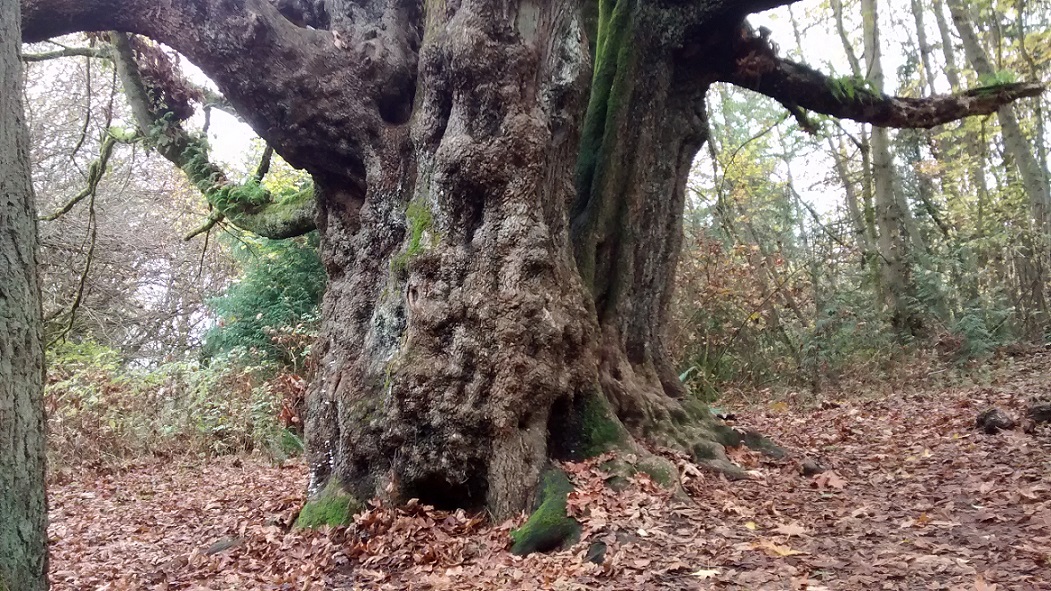
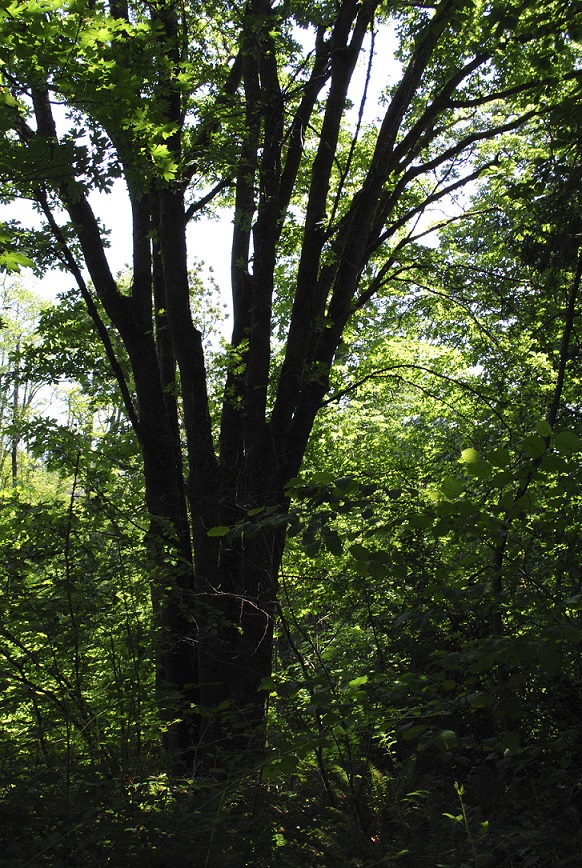
big-trunk2-copyIn a previous post, I wrote about the amazing big leaf maple trees in my local park, Camp Long. Not only are they big in height, but also in girth, with a growth habit of multiple trunks.

But I just visited another gem of a city park, much larger than Camp Long and having an unmatched range of habitats, elevations and vegetation. I’m talking about Discovery Park, located across Elliott Bay from West Seattle. Within the park’s more than 500 acres, there are trails through open meadows, trails through woods, ponds, beach access, views of  Puget Sound and the Olympic Mountains, and a lighthouse. It’s good bird habitat.

I went specifically to see if I could find a snow bunting that had been seen there for several days. I did not find it, but in the course of hiking all over the park, on trails I had never before taken, I encountered numerous startling large trees. Not only did they have multiple trunks, but they had more than I could count!

multi1In Camp Long, I kind of made a game of counting the number of trunks on big leaf maples. I had decided that the average number was between six and eight. But in Discovery Park, the trees were more complicated.

multi2In many instances, they had so many thin trunks reaching out that it was impossible to count them all. Why were they so different from trees growing in Camp Long? For one thing, trees in Discovery seem to have much more room to spread out and grow. They’re not as crowded. Maybe they spend more time growing out rather than up.

img_20161111_124224500Whatever the reasons, the trees are magnificent and I’m glad they have been preserved. I snapped a few photos of the more impressive specimens along my walk.

big-trunk1-copyimg_20161111_122955198_hdr

1650 Gallery Exhibition

I am pleased to have two photos chosen for the 1650 Gallery exhibition “Small Towns & Rural Places,” which opens Oct. 24 in Los Angeles.

I recently explored the farmlands and small towns of eastern WA and found much photographic inspiration there. My trip seems perfectly timed for this show.

Here are the photos to be exhibited. If you’re in LA later this month, please visit the gallery!

sprague-gun-club-by-joan-miller
Sprague Gun Club
ritzville-morning-by-joan-miller
Ritzville Morning

Magical Moments in the Mundane

geese1-1

Even what starts out as the most mundane neighborhood walk can turn into something more interesting. I am always checking out the trees, shrubs and flowers that I pass, and always watching for birds. Lately I’ve been taking a new route just a few blocks from my house, down the big hill to a redeveloped community known as High Point. Incidentally, it is located near the official highest point in Seattle.

pondI’ve been drawn to my particular route because it passes the large community garden, and one block beyond that lies a nice little pond.

On the way, I pass such flowers as hollyhocks, sunflowers and lupines that ring the vegetable garden. Lining the street are notable trees that are dropping large seed pods.

filbert-podI recognized the somewhat floppy-looking leaf as being in the filbert family. filbertI have never seen the seeds before, which I assume become nuts like the familiar little round filberts that I recall from mixed nut tins we sometimes had in the house in my childhood. Those nuts that seemed like cheap fillers; they were not my first choice.

Invasion of the Tribbles?

tribblesI think perhaps these trees are not the same as the commercially raised American hazelnut trees, but very similar. The large rather frilly bright green seed pods contain several chambers for nuts, and when you touch them they leave a sticky substance on your fingers! Several seed pods were strewn on the sidewalk, looking like the tribbles from Star Trek. Most were empty of their nuts. I assume the squirrels are enjoying them.

Bird Life

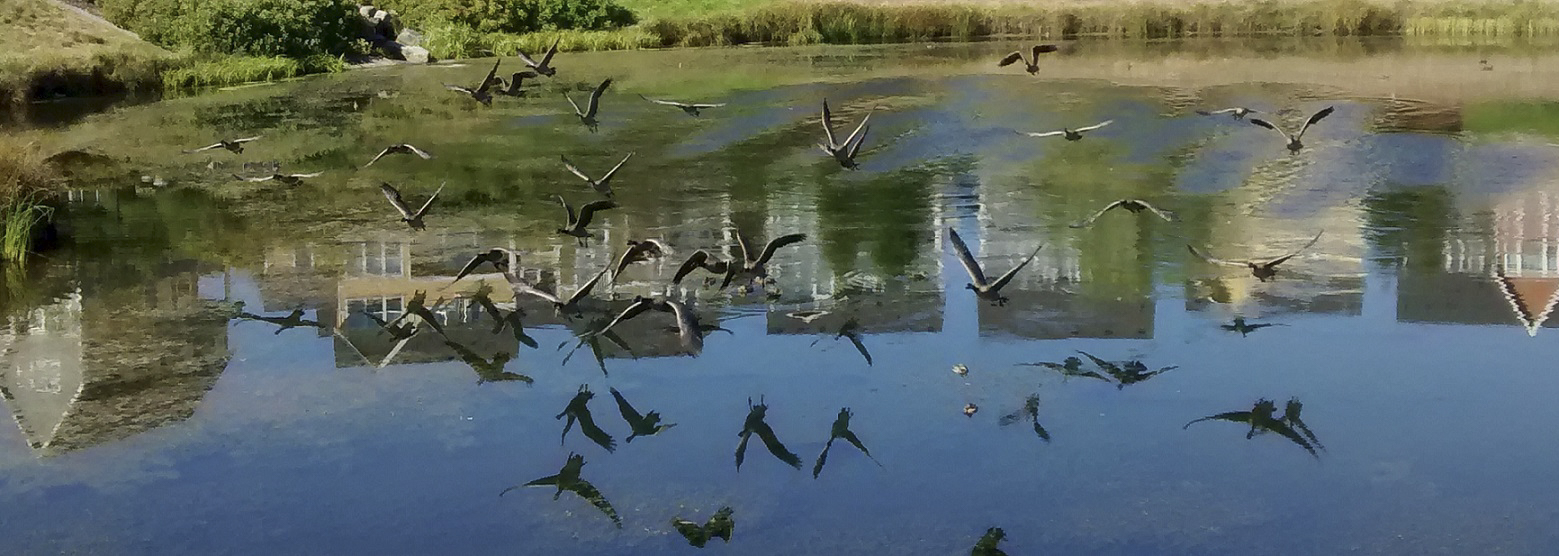
duck-linesLife around the pond is somewhat unpredictable. The mallards that stay there are predictable, but some days there are Canada geese.

geese2-2The number of mallards varies from day to day. I think some are this year’s young. The ducks are unknowingly artistic, making lovely patterns on the water as they paddle around. I observed them creating perfect horizontal lines, circles and Vs.

duck-veesduck-circleA couple times I’ve a seen a kingfisher, which is pretty cool. I’ve even heard a kingfisher rattling by from my bedroom window a couple times. Now I know I wasn’t imagining things, and I now know where it was going or coming from.

kingfisher-1
Belted Kingfisher on railing
Whale fins sculpture

I have discovered fish in the pond! No wonder the kingfisher was fishing around there. They appear to be goldfish. There are little orange ones and a blackish one. I wondered if they had been officially stocked in the pond, or whether some neighbor had dumped them there. I decided it didn’t really matter. They probably weren’t hurting any particular ecology.

nightshade2
Nightshade
nightshade1
Poisonous nightshade fruits; no mystery that they’re related to tomaotes!

In fact, the pond seems to be getting choked by whatever the green plant is that grows in ponds and chokes them. The same thing is happening in the pond at the park next door, and door, and I wonder if the right thing to do is dredge some of it out.

Ornamental river birches near the pond
River birches, with lovely peeling bark, near the pond

One day I was surprised by two white-crowned sparrows in some shrubs by the pond. They’re around Seattle, but uncommon. I almost never see them in my yard.

There is a nice variety of habitat circling the pond. There are trees, shrubs for covers, grassy areas, and a rushing brook and waterfall that empties into the pond. Queen Anne’s lace, clovers and thistles grow in small clumps.

queen-annes1-113645813
Queen Anne’s Lace
queen-annes3-113611923
Later stage
queen-annes2-113556176
Even as it fades, it’s lovely

I’ve watched dragonflies patrol the air over the pond and I’ve seen goldfinches gliding overhead.

decorative-rock
A decorative carved rock, circles representing raindrops

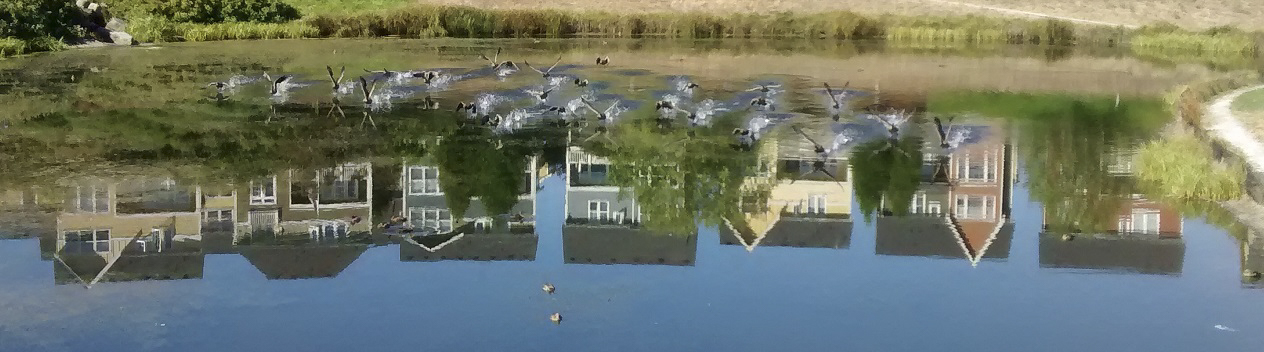
When the sun shines, a walk around the pond is warming and happy. When there are clouds, there are magical reflections across the surface of the pond.

img_20160904_115036429img_20160904_115137703It’s a small thing, likely taken for granted, overlooked and little used by nearby residents, but for me, the pond is a fresh destination.

img_20160904_115259347

Northwest Tribal Canoe Journey

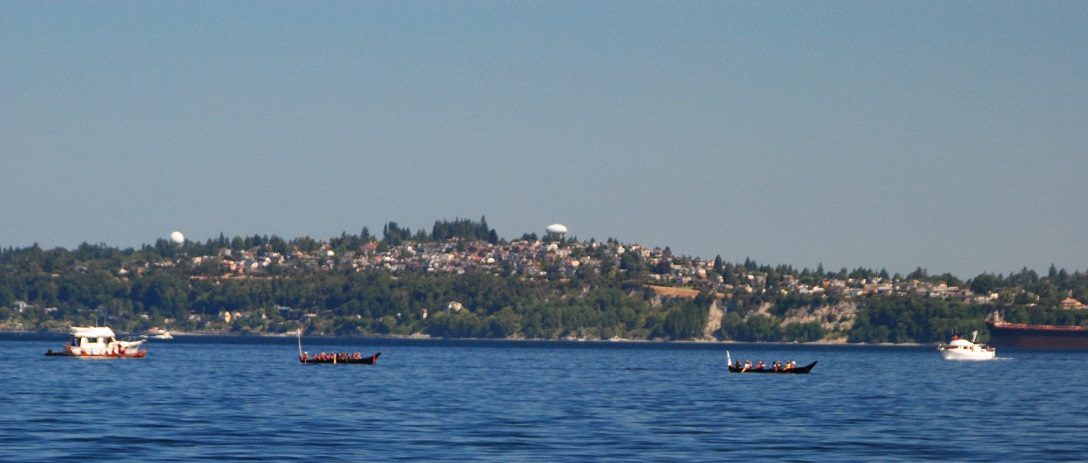
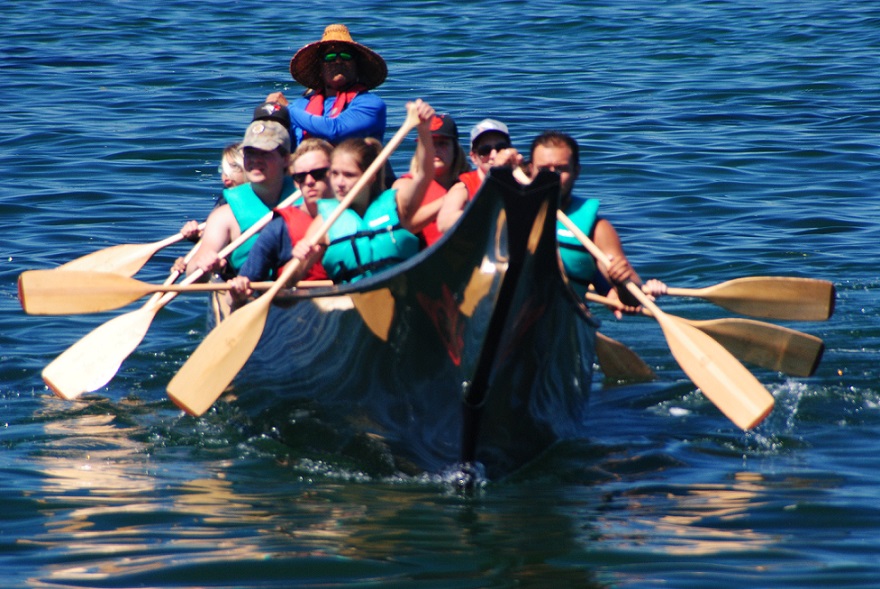
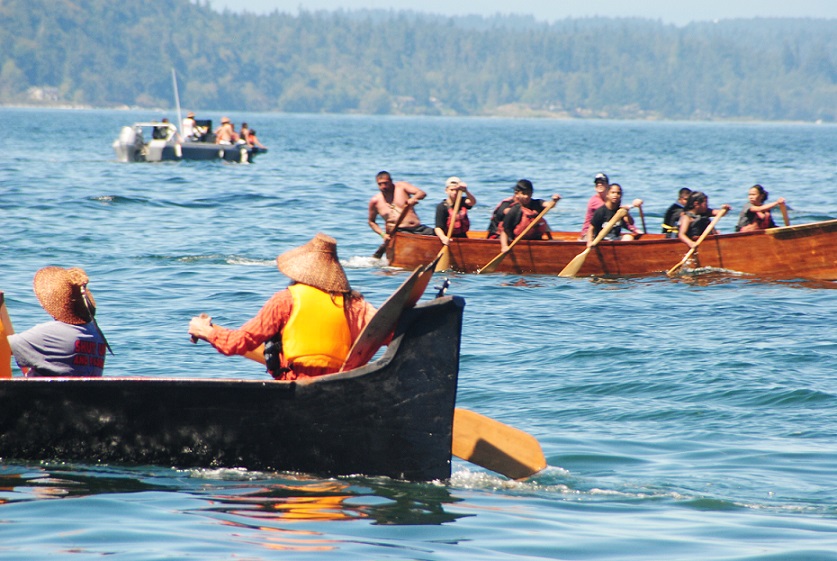
DSC_0785 - CopyAs I looked out from the beach in West Seattle, they appeared as specks on the horizon. But as they inched closer, if I looked hard enough, I could see their paddles undulating in unison. They made me think of Viking ships with dozens of long wooden oars pushing the boat through the sea.

Mt. Baker in the distance
Arriving in Puget Sound, with Mt. Baker in the distance

They were coming! Suquamish, Makah, Swinomish, Jamestown S’Klallam, Squaxin, Cowichan, Quileute and many more tribal members participating in the annual canoe journey in the Northwest.

DSC_0828This year’s celebration, the Paddle to Nisqually, journeyed to the Nisqually Tribe’s lands near Olympia in July. But first, the paddlers converged at Alki Beach in West Seattle, to be welcomed by representatives of the Muckleshoot Tribe, on whose territory they had landed.

DSC_0877DSC_0825DSC_0807

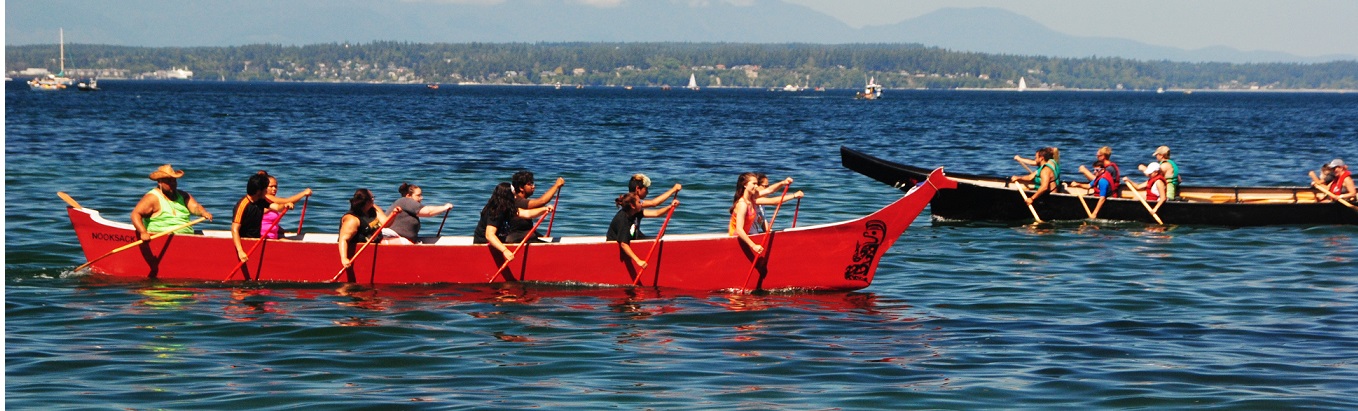
More than 70 canoes from Washington and Canada were making their way on a physical and spiritual journey. From Seattle, the canoes would travel over Puget Sound to the tribal lands of the Nisqually, hosts for this year’s cultural ceremony.

DSC_0854The annual event is held at a different location each year, and has a common goal of “providing a drug and alcohol free event and offering pullers a personal journey towards healing and recovery of culture, traditional knowledge and spirituality.”

DSC_0815DSC_0830DSC_0816In the past, canoes have even carried Native Hawaiians, Inuit and Maori to the tribal ceremony. It’s hard to imagine human beings paddling across an ocean. Of course, they have support boats accompanying them, and change paddlers to provide rest during the journey. But still!

DSC_0890As the canoes arrived at the beach, the paddlers pulled them ashore, temporarily. Then, as more participants arrived, they went back into the water and paddled around together. I understood that this was part of the tradition.

DSC_0793DSC_0889DSC_0921DSC_0929DSC_0898After a fewDSC_0846 dozen canoes had arrived, the crews assembled close to the beach, lining up the boats and sitting with their paddles held straight up. They waited to be welcomed ashore.

DSC_0860DSC_0983DSC_0982DSC_0974DSC_0914DSC_0941DSC_0943DSC_0948DSC_0949DSC_0963Each canoe asked permission from the Muckleshoot Tribe, hosts for this part of the journey. Women of the Muckleshoots then spoke to each canoe in turn, speaking in their language and beating a small drum.

Muckleshoots welcoming the canoes

As each canoe was welcomed, the paddlers pulled it ashore and carried it up onto the land for the night. Men, women and teens helped shoulder the load. The authentic dugout canoes looked pretty heavy!

DSC_0947DSC_0995


The participants welcomed outsiders to witness their journey, admire their canoes and chat with them. I met a woman who came from Neah Bay, all the way at the western tip of the state. I had visited Neah Bay years ago, and recalled its beauty and wonderful smoked salmon!

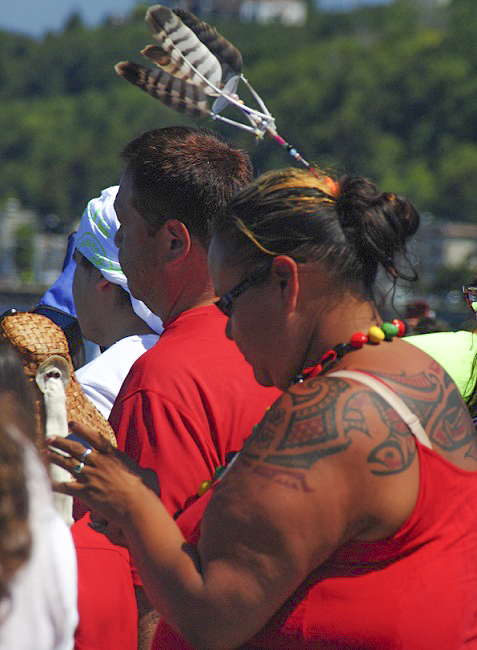
DSC_0970DSC_0933I enjoyed checking out their canoes, many with native paintings and words. Some paddles also had native art, and many canoes flew flags of their tribes.

woman tattoo (1 of 1)It was inspirational to see such a large group of people, coming together to celebrate and strengthen their cultures and community, and in many cases to restore their own well-being along the way.

chehalis (1 of 1)I hope the rest of their journey was peaceful.


DSC_0888

DSC_0808

DSC_0994

The Strange Habits of Some Trees

tree5While walking in my local park, Camp Long, recently, I stopped to observe just how many multi-trunked maples there were. I had seen some before, but now I realized it seemed there were no single-trunk maples to be found. The Big-Leaf Maple is the only maple native to the Pacific Northwest. Since relocating from the east coast, I find it so easy to identify maple trees here. I simply declare them “Big Leaf,” and just double checking the leaves, reassure myself that I am brilliantly correct. The leaves, in fact, ctree19an be HUGE!

Digression I
Were I on the east coast, maple identification would be trickier. The same goes for oaks. In the Northwest, we have only one native, the Garry Oak, and it’s uncommon at that. Whenever I’m in the presence of one, I feel I must pay my respects. They need a particular ecosystem to thrive, a type of prairie that has grassy savannahs and gravelly dry soils. These meadow communities support grasses, wildflowers and oaks. According to the Washington Native Plant Society, where these prairies still exist, the Garry Oaks have stood as long as 300 years. The society notes that such ecosystems are threatened by human development and encroaching Douglas firs. It seems badly ironic that one native species can push out another.

But, to end my comments on oaks: the eastern states have a plethora of oak species that fall into either the white oaks or the red oaks. That sends me to my field guides for IDs.

Digression II
I’m grateful for some simplicity in the Northwest. However, things are not so singular and simple when it comes to conifers. I am somewhat embarrassed to admit that even after taking classes, I am still stymied by the range of fir, spruce and pine trees here.

I am pretty confident in identifying western red cedars. I have one in my front yard. The tiny cones are the giveaway for me. Douglas firs, ah I have sweet memories of former Christmas trees named Doug. Doug firs have pale gray-colored trunks that rise straight as telephone poles. That’s my giveaway. And if I see small cones around the tree that have little fringes at the top, I know for sure it’s a Douglas fir.

tree1The World of Big-Leaf Maples
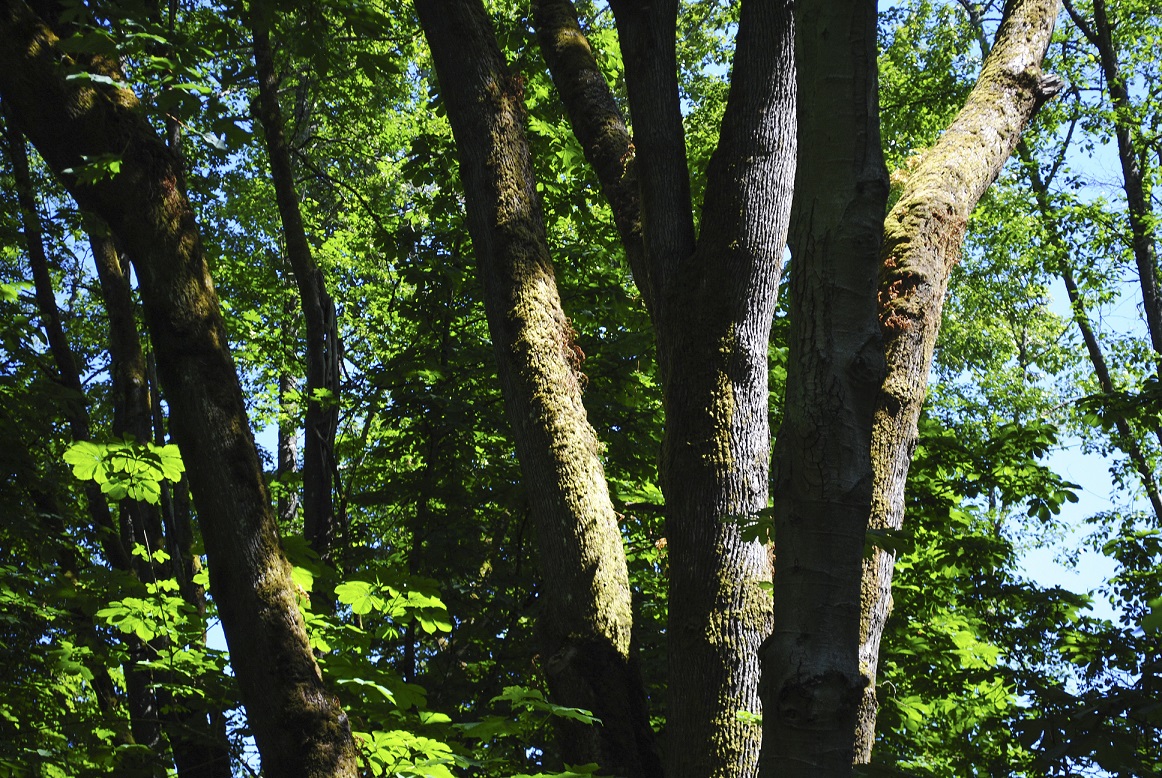
Big-Leaf maples, Acer macrophyllum, play a multifaceted role in the forest. Not only do they provide food and shelter for numerous birds and wildlife, they also host other plants. Moss, lichens and licorice ferns grow on the bark.

Lichen on a trunk
Lichen paints a trunk

They grow rapidly and can reach 100 feet high and 50 feet wide at the canopy. These trees live up to their name. While the trees are large, their five-lobed leaves are the largest of the maples. Every fall, when the golden leaves start to cover the ground, I like to try to find the biggest leaf.

A big find
A big find

Multiple Trunks
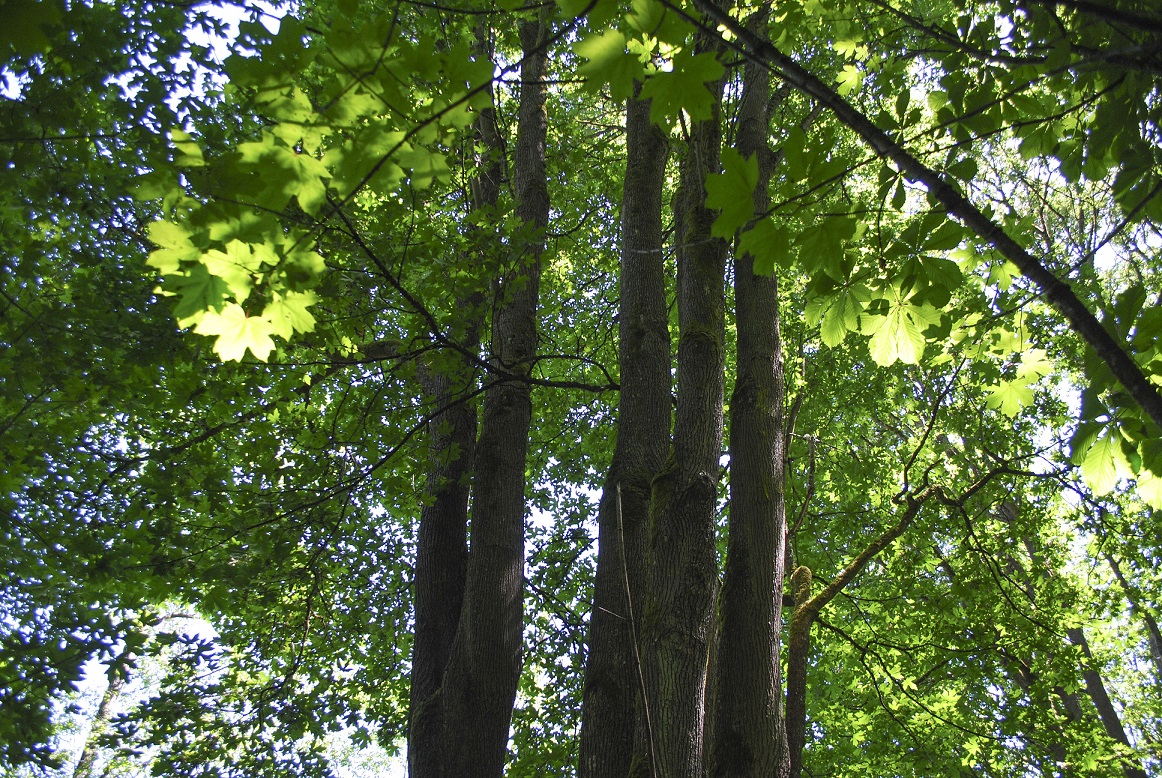
But the most fascinating thing to me about big-leaf maples is their habit. The original trunks diverge into several others, which I will call siblings. And then, even some of the siblings further branch off!

tree3
I had to find out whether this was normal or just random. In some ways, they reminded me of celery, with many stalks rising from the base.

tree8tree11Upon some light research I confirmed that big-leaf maples do grow this way and it is quite normal. In fact, it would be abnormal to have a 100-foot tall big-leaf maple that had only one trunk. I doubt that ever occurs. The result is, as you walk through the woods, you experience a landscape that is richly layered, not monotonous.

tree2

tree18There’s not a single-trunked tree here and a single-trunked tree there. There’s a maple with five massive trunks here, and one beyond with six, and for every tree, the height at which the trunks join or diverge varies. Some siblings lean far out from the others. The bases of these mature trees are also interesting to study.

tree14tree16The national champion Big-Leaf Maple is listed by American Forests as standing in Lane, Oregon, at 119 feet high, and 91 feet across the crown!

No doubt these trees dominate the forest and are vital to the ecosystem. Other big companions include conifers, madrones, buckeyes (horsechestnuts), alders and poplars.

tree9tree13tree21tree22tree23

I’m grateful that even though my park is heavily used by humans, it has a good variety of native plants and provides habitat for wildlife.

A baby Big-leaf Maple

Gallery Competition Award

I am pleased to announce that the Contemporary Art Gallery Online has awarded Judges Choice to my photo, Creepy Fern Guy! The photo is part of the All Botanical exhibition.

JoanMiller_Creepy Fern Guy_Photography_8x10_100Here is a link to the show: http://www.cagonline.gallery/May-Botanical.


A Peek at a Chickadee Nest

The baby chickadees have fledged. I suddenly realized I should probably clean out the nest box.

This is my first experience hosting a bird nest! I watched the Black-Capped Chickadees build their nest in my birdhouse. I watched as the adults flew to the box with something in their mouths. I assumed they were nest building. I left mounds of cat fur for them and apparently, they used it.

Weeks went by, as I watched the adults flying to and fro. After a while, I realized I hadn’t seen any activity coming and going from the birdhouse and wondered whether I had missed the young fledge. I watched and listened in my yard for baby birds. Sure enough, I began to hear what sounded like baby chickadees begging. It’s not hard to distinguish the sounds of the young from adults. They were still close to home!

It was then that I wondered whether the pair would have a second clutch. I did a little research and learned that it was possible, but not certain, and that if they were to start another nest, it could be pretty soon. So I decided to clean out the birdhouse.

I was eager to see the nest. I carefully removed the back door and peered inside. It was not what I was expecting. For some reason, I was expecting to find the standard round nest, a perfect circle. But instead, there was a thick bed of moss, lined with bits of fluff and fur. This is typical chickadee nest material. What a plush, comforting, supportive bed for eggs and chicks!

I lifted the nest out and took some photos.

chhick nestDSC_0427chick nestDSC_0429chicknestchick nestDSC_0430