A Journey West, Part 4

The Land of Big Sky and Bison

On a beautiful sunny morning in May, I rolled into Montana. On the way to my friend’s house, I just had to make a brief side trip to Yellowstone National Park. I had been there once before, about 30 years ago. It was hot and sunny, not the best time to be out in the open for me. Yellowstone is a huge park, so I could visit only a few sites this day. I made my way down to some geysers, hot springs and mudpots.

DSCN0896DSCN0901The colors around some of the hot springs are spectacular, from microorganisms that live in and around them. Rich hues of orange or yellow ring the edges of the water.

DSCN0912DSCN0922

DSCN0921Look but don’t touch! This is some hot water. The mudpots are amusing blobs of saturated sediment like boiling pots of chocolate. Steam below the ground forces the mud into the air at random periods of time.

DSCN0909

Bison are easy to see in the park. They just stand around, grazing. But make no mistake, they are far from tame and slow.  I wasn’t too interested in getting close.

DSCN0924But the clock was ticking and I needed to get going to my friend’s house in Livingston. It had been many years since we saw each other.

A few days later, after a wonderful reunion with my childhood friend and her family, I had to move on from the cute and historic little town of Livingston. Washington, my new home, was calling! I had only a couple days to meet up with my movers and settle into my apartment.

My route took me northwest, through Idaho for the first time. I had to pull over to record this strange highway sign. Just where was I? If I took this exit, would I end up in nowhere?

DSCN0951Farther down the road, it began to look more like ski country.

ID1Pretty soon, I was driving along Lake Coeur d’Alene, a gigantic recreation area. There’s not much water in these parts and I was certain that the lake is a summer pilgrimage for many.

USA map for blogMy overnight would be in Spokane. I stayed in a convenient, nondescript motel. The next morning I returned to I-90 west, passing through lots of agricultural areas and dry country.  At a rest area, there were interpretive signs about the natural landscape. I was happy to see that my new state valued its natural resources and I was eager to learn about them.

DSCN0956When I came upon my first views of the Columbia River, I had to stop and take it in. There were some wildflowers blooming that I would later try to identify. It was hot and dry and felt like a desert.

DSCN0973Crossing the big blue river, I came upon signs for the tiny town of Vantage and its oddities. I had to stop and see for myself. The signs promised petrified gingko trees and petroglyphs. Sure enough, there were some pieces of petrified trunks, and a short hike produced some Indian paintings on rocks.DSCN0984Down below, a small road disappeared into the river, the only evidence of a town that was covered forever when the river was dammed.

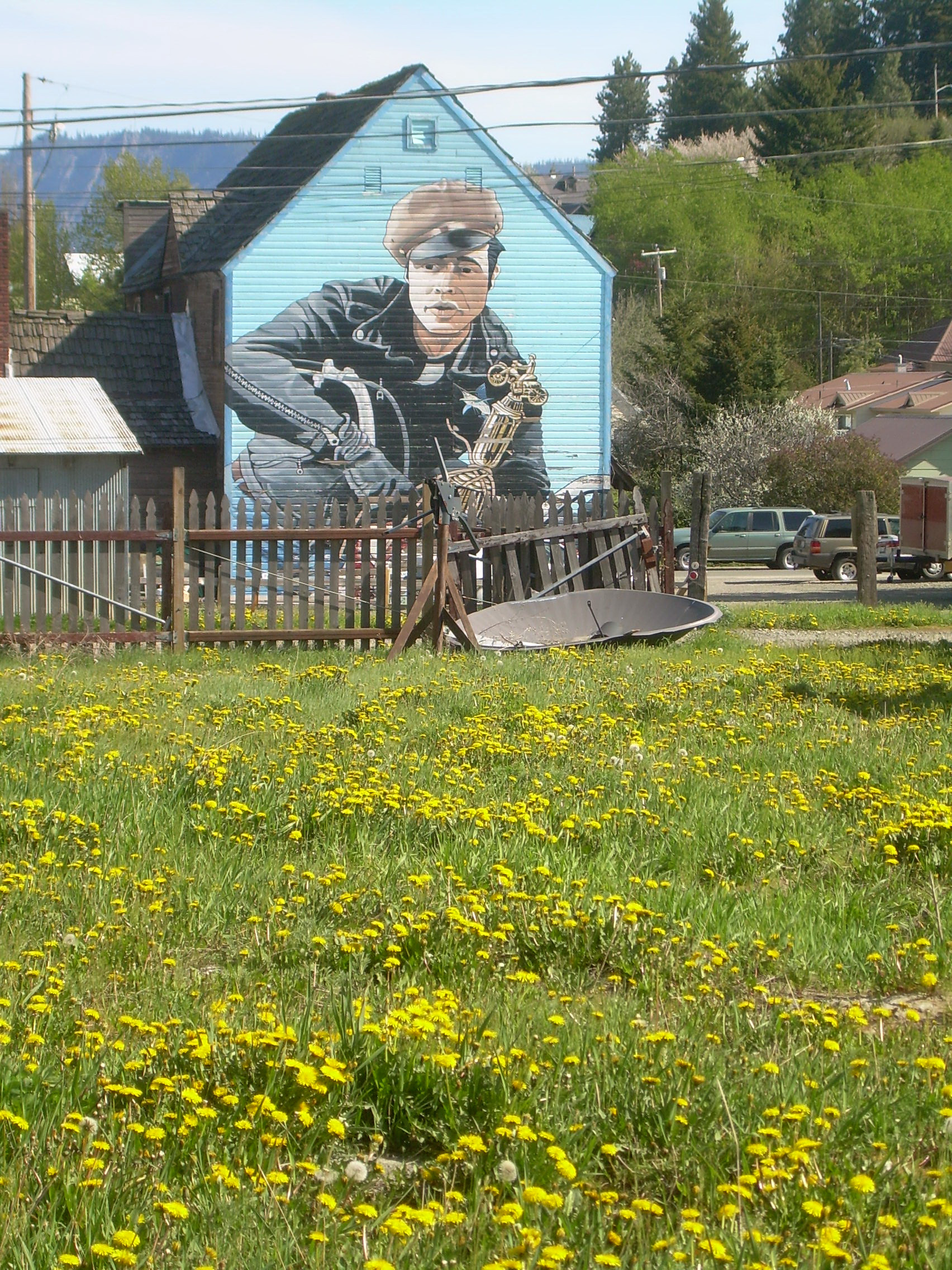
Continuing west, I wanted to stop in the tiny town of Roslyn, which is designated a National Historic Landmark. Having read about it, I had to see the painted mural on the side of the building that became famous in the opening scene of Northern Exposure. I could just picture the moose ambling by.

DSCN0997Fewer than 1,000 people live here. The  town has some other interesting buildings and murals, some related to its history of coal mining. The mines drew workers from around the world, and the town was bustling as the  mines pulled out tons and tons of coal. But by the 1920s, they began to shut down.

DSCN0998DSCN1000

DSCN0995DSCN0999I was just two hours from Seattle.

When I arrived at my new apartment, I was amazed to find that I had a small view of Puget Sound and the Olympic Mountains!

DSCN1002That was eight years ago, and I’m still very happy, though have moved on to my house!

DSC_0348 - CopyThe End


Rabbit Run

rabbit running

I just finished reading Watership Down (I know, a few decades late.) I will likely never think of rabbits in the same way again! When this year began, little did I know what a Year of the Rabbit it was shaping up to be for me. For the Chinese, it might be the Year of the Goat or Sheep, but for me, decidedly the year of the rabbit.

Sometime early in the year, I put an old calendar photo of a jack rabbit on my frig. It’s a beguiling creature, with its spectacular ears and piercing eye. I’ve always wanted to see a jack rabbit in the wild. I felt the photo was a good omen for the year. Aren’t rabbits considered good luck? At least their feet have been held as lucky pieces (alas, not for the rabbits).

Rabbits have been bestowed with magical powers in various cultures, art and literature. We westerners may see the Man in the Moon, but in Asian, Mexican and Native American cultures, they see the Rabbit in the Moon. It’s pretty obvious, too, that they are right! The rabbit is there plain as day, although what I see is a running rabbit, while Asians see a rabbit hunched over a mortar. For Chinese, the rabbit is the companion of the moon goddess Chang’e, and is preparing her elixir of life. For Japanese and Koreans, the rabbit is pounding ingredients for rice cake.

Rabbit in the Moon
Rabbit in the Moon

It’s been a subtle chain of occurrences, but I now realize that for a few years, rabbits have been coming into my life. I acquired a lovely ceramic planter with such a sweet rabbit face that I had to have it. Then, I bought a silver-colored planter type bowl, ringed with rabbits. After I moved to Seattle, I attended the Northwest Folklife Festival, where I met a potter among whose wares were some small dishes decorated with charming rabbits. I couldn’t resist and bought one for myself and another for a friend.

Scouring a thrift store on a road trip, I found a flat black metal figure of a rabbit. It would be perfect for my garden, I thought! Obviously I was feeling some affinity for with rabbits. Then, I received a gift of another rabbit-themed piece of pottery, a very small dish perhaps to hold sushi. It was a nice companion to the rabbit spoon rest from the festival. Another gift from a friend was a hand-painted rabbit-shaped box from India. What inspired her to give me a rabbit?

It was about then that I did realize I was starting something of a rabbit collection. When I went to Scotland, I picked up a small watercolor of a rabbit on the Isle of May.

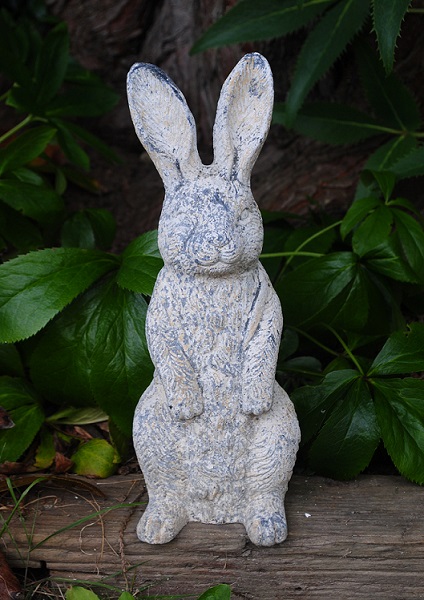
Recently, at a neighbor’s yard sale, there were scads of garden rabbit figurines! Most were too cutesy, but one caught my eye. It was a rustic white-painted metal rabbit, sitting tall and looking more natural. This one would do. He told me his name was Benjamin, and he now watches over my garden.

Benjamin
Benjamin

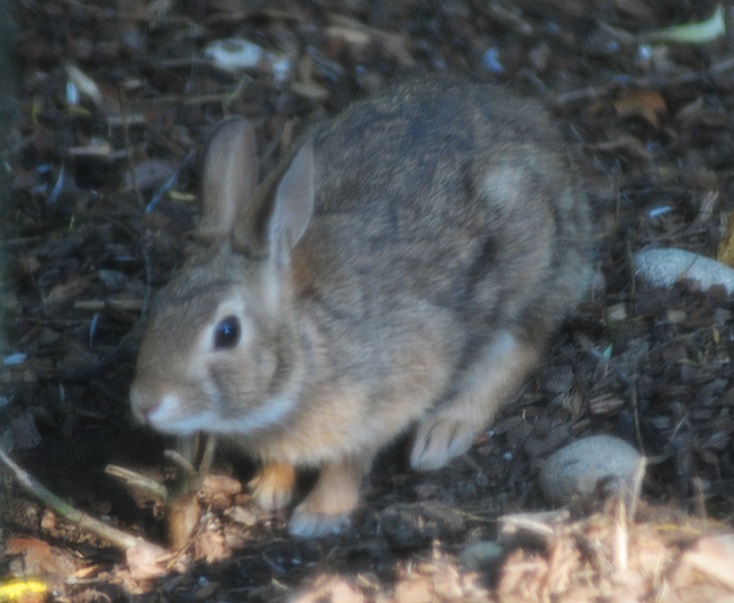
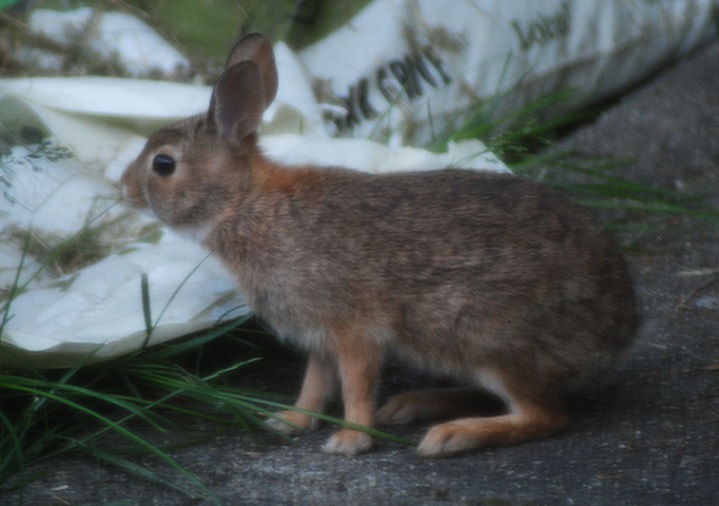
Somehow the word got out and I noticed rabbits in my yard a couple times. One morning I opened my front blinds to find a cottontail happily munching grass. I quickly scanned my veggie garden to see whether anything was missing, but everything seemed fine. The bunny was eating grass and weeds. Had it not discovered my spinach, beet greens or the mass of leaf lettuce? Or were those not appetizing?

A visitor to my yard

I had seen these small brown cottontails hopping about for a few months. I’m sure they were born in the big park next door. They come and go under the park fences. Lately they had become bolder and were wandering farther from the park. I had seen them outside my front fence a few times, and now, here was one, in my yard. Maybe when I made a home for Benjamin Bunny in my garden, I unwittingly placed a welcome sign out for other bunnies. Much like the custom of hobos leaving symbols for others [a cat meant “kind lady lives here,”] my inorganic rabbits signaled to their flesh-and-blood kin that this is a safe house.

rabbit yard2I watched the one cottontail in my yard for as long as it was in view. It darted around nervously, briefly interacting with a squirrel. Did they talk to each other, like in Watership Down? Did the rabbit ask the squirrel, “Are there men here?” or “Is the food good?” The rabbit hopped out of the yard, and returned a short time later. I saw its buddy outside the fence. They both shot off toward the park.

Rabbit (at top) and squirrel
Did the squirrel talk to the rabbit?


Since reading Watership Down, I wonder about the social structure of rabbit warrens. How many local rabbits are there? How big are their burrows? In the book, the intelligent rabbits were able to communicate with other critters, and had exceptional senses of smell. Their sense of smell serves to alert them of potential dangers. They stamping of feet as an alarm is also noteworthy. They obviously have their own communication system, similar to birds’ raucous alarm calls.

I don’t expect that our rabbits actually “talk” to other creatures, but surely they are tuned into all the sounds around them, and do respond to bird alarm calls as well. Even I respond! Recently there was such a ruckus among the Stellers Jays, and I saw several crows fixed on something too. So I went out to investigate, and sure enough, there was something — a cat in the yard. Any rabbits would have made a beeline for their holes long before.

I haven’t noticed any of our rabbits in a while, but then again, I haven’t been looking very often. I trust they are fine and hopping about, munching away on the free buffet, and occasionally talking to the squirrels, mice and birds.

The Giving Tree

DSC_0181About this time of year, I start to notice the activity around my neighbor’s large cherry tree. Some of its branches arch over my backyard, though not low enough to pick any of the fruits now. I have tasted a few in the past and they aren’t bad.

This is a tree of many gifts. In the spring it graces us with its soft pink blossoms that have the effect of making the tree glow. After a couple weeks the petals loosen their grip and float on the air like pink snow.

Months later, after the tree has become a uniform shade of green, its true destiny begins to emerge. Tiny green fruits appear with the promise of a summer bounty. Weeks later, they slowly transform from green to a yellowish pink and pale reddish. During this time, I watch the ripening progress, knowing what is to come.

DSC_0182Then one day, some berries are fully red. Several years ago, I stood on my deck and watched a raccoon, at eye level, happily munch away on the cherries. This year I’ve seen no raccoon, but now that the fruit is ripe, the birds are wasting no time.

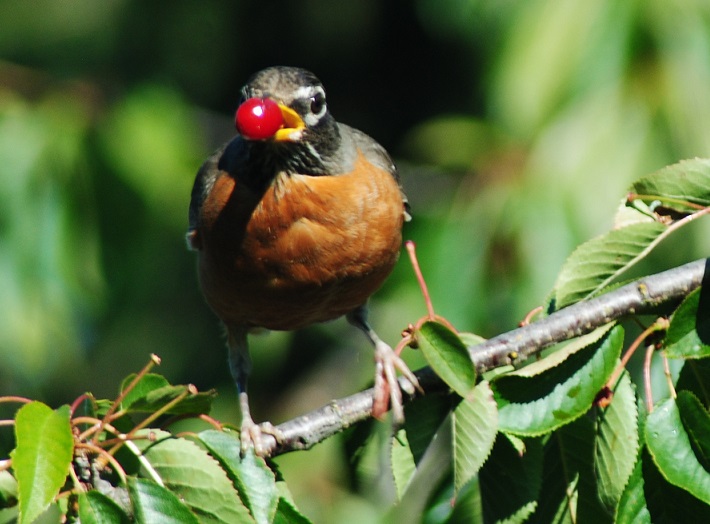
Robins fly into the tree and grab cherries, swallowing them whole. I’ve seen Cedar Waxwings do the same with Oregon grapes. How astonishing that a tiny mouth can open far enough to take in the berry, and then, even more astonishing, swallow it whole! It’s akin to a person swallowing a football! The cherries, however, are not as huge as the Oregon grapes.

DSC_0210 - CopyDSC_0214 - CopyAll gone!All gone!

Chickadees, Black-Capped and Chestnut-Backed, peck away at the fruits. I’ve also seen House Finches and House Sparrows partaking of the free repast. But the Steller Blue Jays, with their huge bills, don’t appear to eat the cherries. I would think they, of all the birds, would be devouring more than anyone else. We have hoards of the great, raucous birds.

Black-capped Chickadee

I would also think woodpeckers would like the fruit. I once observed a Pileated Woodpecker in Maryland that was perched amusingly on a small spicebush shrub, eating its dark ripe berries. But I have seen no woodpeckers in the cherry tree.

When all the cherries have been eaten, I wonder what the next adventure will be for the birds.

A Journey West, Part 3

My route west
My route west

Colorado

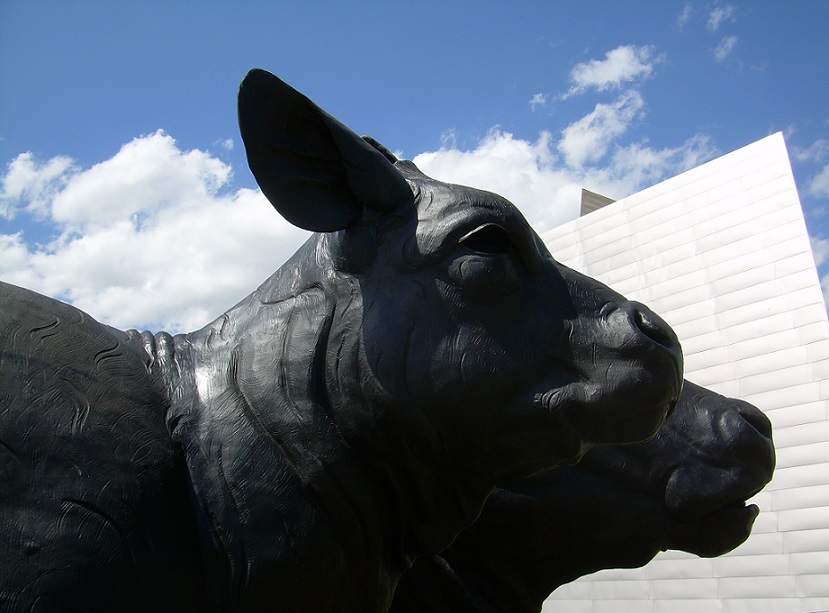
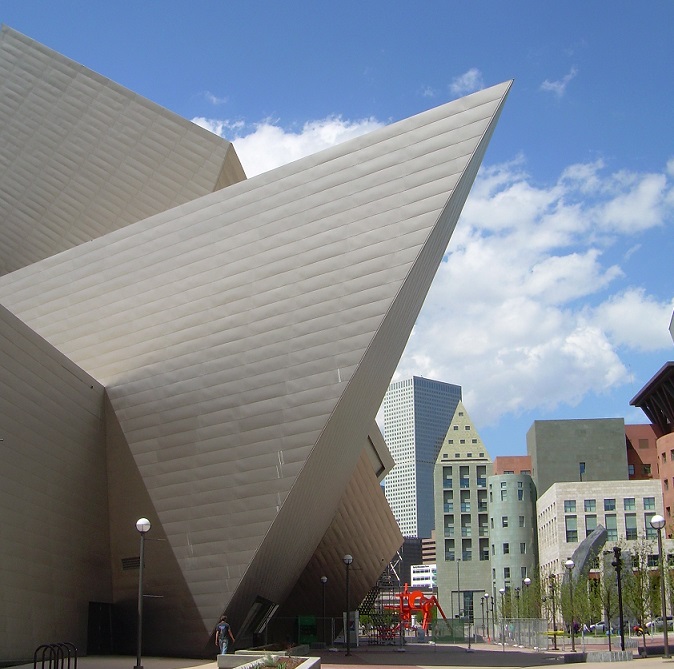
Rocky Mountains, cattle, sagebrush. Now I was really getting into the west. I arrived in Denver in blazing sunshine and summer temperatures. I visited with my cousin and spent a couple days playing tourist. The Denver Art Museum had a newly modernized vibe. I got to see a couple Georgia O’Keeffes I had not seen before. The first floor bathrooms have a whimsical feature: Singing Sinks, a musical work of art! When you run a water faucet, it plays Row, Row, Row Your Boat! And if you get more than one faucet running, you’ll get a chorus! I loved it. Another fun thing that will have you chuckling is the gurgling water fountain. The architecture is a feast for the eyes, but the real star is the actual art in the museum.

Near the art museumCO2


Near the art museum

CO3 CO4

CO6CO7


CO9Denver has a lot going for it, with the Platte River running through it and the Rockies for a backdrop. What a great place to live and work. But, a little too hot and dry for me!

It was time to say goodbye and head up to Wyoming.

Cowboys, Oil Wells and Elk

wy2Driving into Wyoming, I felt like I was entering real cowboy territory. There is a lot of land between towns. I drove past old storefronts and imagined tumbleweeds scurrying across the road. The names of the towns like Cheyenne and Laramie seemed to carry so much history with them. Between those towns I came upon a strange monument to Abraham Lincoln. I could think of no reason for it to be there. It’s a giant bronze ahead atop a 30-foot high granite base. Turns out, it originally stood at Sherman Summit, the highest point on the old Lincoln Highway. The head was moved to its current location when I-80 was completed. At more than 8,000 feet above sea level, this spot was chilly and snowflakes were swirling. The snow coated a nearby fence in a very picturesque way.

Laramie
Laramie

wy laramie3

WY laramie5

wy3

wy1

As I continued north to Jackson, I left the snow behind. A sign for Pinedale reminded me of the massive development of the oil and natural gas industry there. Drilling and fracking have been going on for decades. Impacts on wildlife such as sage grouse, pronghorn, mule deer and pygmy rabbits have been substantial.

wy4Off to the west, I saw darkening skies, and what looked like a large rainstorm brewing. The scene was a classic western wide-angle sky. I pulled over to snap a few photos.

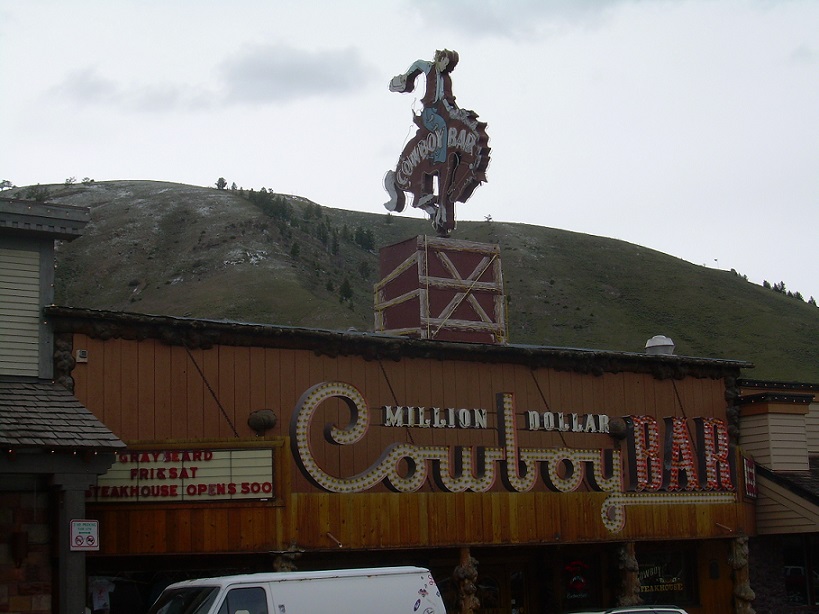
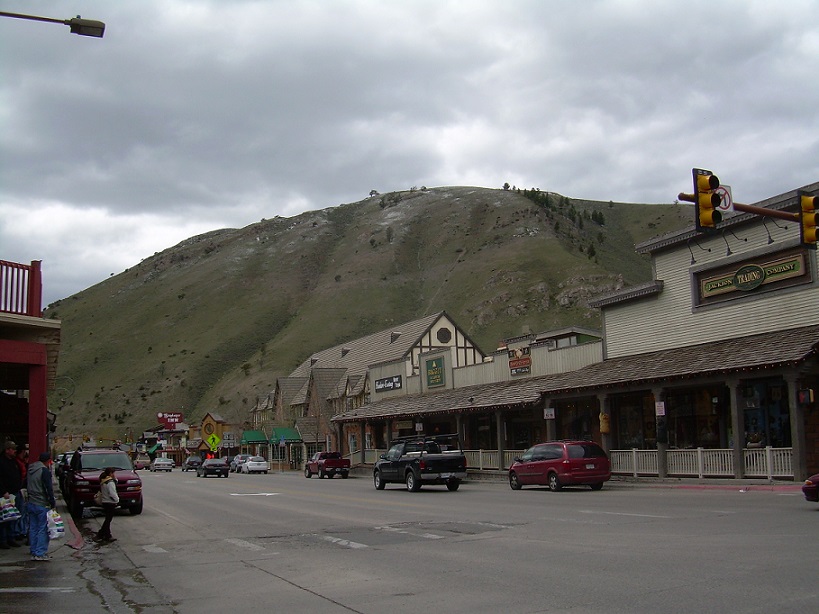
wy5When I arrived in Jackson, the excitement rose as I neared my friends’ home. What a spectacular backdrop they have: Grand Teton National Park. The snowy peaks were majestic against the blue sky. We had a nice dinner out and I saw a bit of downtown Jackson, famous Jackson!

wy6wy7

Famous elk antler arch in Jackson square
Downtown Jackson
Downtown Jackson

wy11


The next morning I awoke to a fresh snowfall! Just another spring day in Jackson! The snow wasn’t very deep; just enough to be pretty. I got to see more of downtown, with its famous square, set off by massive arches of elk antlers. I also got a brief tour of the national park. We tried to find a moose, but had no luck. I had never gotten a good look at one, and still haven’t.

Looking down on Snake River
Looking down on the Snake River

wy12

After a good visit, it was time to head north to Montana. I headed up a pass, where a beautiful layer of snow set off conifers against a vivid blue sky. I passed a few people who were gearing up to take advantage of some late-season cross country skiing. Soon I was out of the snow and warming up again.

A Short Tale

There are a lot of anomalies in the animal world, not unlike the human world. Animals are born albino – lacking the usual pigments, or melanistic – having darker than normal pigmentation. Some are born with extra toes or curly coats.

Eastern gray squirrels can exhibit several variations. In certain regions, many are all black. I even saw some around the U.S. Capitol that were white and light brown in color. I have learned that it’s not uncommon for them to have short tails.  I have noticed one frequent visitor to my yard. I dubbed it Stubby Tail. I am not sure whether it’s female or male, but I am thinking it’s female. I recently saw it being followed closely by another squirrel, and it just seemed like a female-male thing. So, let’s say Stubby Tail is a girl.

stubbytail2Normally, I can’t tell one squirrel from another, unless it has a specific field mark. Stubby Tail makes it easy. And normally I have no particular affection for the rodents, as they paw through my flower beds and try to break into my bird feeders. But I have come to like Stubby Tail.

At first, I thought she had survived some sort of attack and lost part of her tail. But the more I examine it, the more I think she was born that way. The tail is about one-third the typical length, very bushy and kind of stands up, with a bouquet of fur sticking out in all directions at the end. If it had been a normal long tail, and had gotten snipped off, I think it would be straighter and just look like a tail that had lost its end half.

stubbytail4When I did a web search on squirrels with short tails, I turned up some interesting tidbits. Other people have observed the same phenomenon, and I found some photos that looked exactly like Stubby Tail! I was not alone and neither was Stubby Tail. My Stubby Tail gets around fine and acts pretty normal for a squirrel, as far as I can tell. Her lack of tail length does not hamper her jumping or climbing or running. No doubt her body has adapted to a different way of balancing.

There are some functions that Stubby Tail will miss: squirrel tails can provide shade against the sun and warmth against the cold. But I suspect she already knows how to cope.

stubbytail8

A Living Fossil

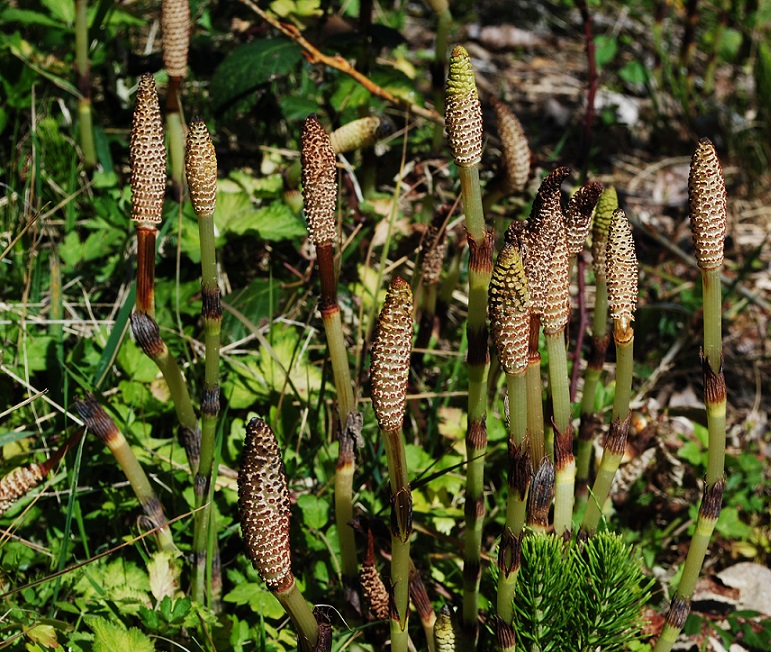
The Paleozoic era re-emerges every spring. You thought it was long gone? Way before dinosaurs roamed the earth, the seas were full of trilobites, brachiopods, crinoids, corals and many other species. Between 251 million and 542 million years ago, the Paleo was rich with life forms. Such plants as cycads, ferns and primitive conifers were thriving.

The class Equisetopsida dominated forest understories, and within that class was the genus Equisetum, to which horsetail belongs. With spring comes the horsetail. In winter it disappears, but as the seasons change, the stalks begin to appear and, like little herbaceous soldiers, they mount their campaign of annexation. It’s easy to see why it’s survived for hundreds of millions of years and flourishes around the globe today. It’s an interesting plant. If you break it apart, you’ll find the stalk is strangely hollow. Primitive for sure, but persistent as cockroaches. It produces by spores rather than seeds, like mushrooms.

horestail6Right now, the reproductive stalks, which make me think of asparagus, are full of very fine pollen that releases into the air in small clouds when you disturb them. I discovered this as I was cutting down some stalks near my backyard. I was horrified to watch as the pollen drifted out. I do not wish to assist in the horsetail’s reproduction.

horsetail1Horsetail is not loved by homeowners. It’s invasive, marching across the ground by way of underground rhizomes, much like the bamboo so wisely planted by my home’s former owner. It grows about a foot tall. You can pull them up or cut them down, but you basically cannot eradicate it. It’s been declared a noxious weed in many places. My only defense is to whack back the growth a few times each summer. But I continue to marvel at the horsetail, secretly applauding the Paleo survivor.

horsetail3

Fields of Color

DSC_0803 - CopyDespite what you might think, the tulip originated in Turkey and didn’t get to Holland until the sixteenth century. To say that the Dutch went a little crazy for the new flower is an understatement.  During a period in the 1600s, known as Tulip Mania, people were scrambling to buy the most prized rare bulbs. They invested huge sums of money in tulips. The demand grew. Prices skyrocketed. Bulbs became as valuable as money in Holland, and, in fact, were used as money for a while.

Can you imagine if we used flowers as currency today? Gardens would flourish. We’d probably need guard dogs around our gardens and big chain link fences. That wouldn’t be much fun after all.

But, back to tulips. They may not pass for money today, but they certainly help bring the cash to the growers. In Washington’s Skagit Valley, tourists converge to see thousands of tulips and leave their cash behind as they pay for parking, take home flowers and bulbs and buy assorted merchandise.

Each April, the Skagit Tulip Festival welcomes flower fans to visit the fields of astonishing color. Rows and rows of red, yellow, orange, pink and purple petals stretch to the horizon. For a few weeks, the area is transformed to a little bit of Holland. There is an actual connection between this region and Holland. One of the bulb-growing companies, RoozenGarde, is run by the Roozen family, which has grown tulips in Holland since the seventeenth century.

People drive for hours to experience the spectacle in the fields outside of Mt. Vernon, Washington. They photograph each other against the painted landscape. They stand, they crouch, they smile.

Flowers bring such joy to us. What it is about them that is so captivating? The colors? The shapes? The fragrance? Of course, tulips have no fragrance. And one tulip is pretty, but not very exciting. In this case, we can be pretty certain that the visual effect of huge swaths of color over hundreds of acres is the irresistible thing. Bulb growers manage more than 1,000 acres in the Skagit for tulips, daffodils and irises.

But the tulips are not there just for their beauty. It’s a business, after all. As the blooms begin to fade, the growers “top” them, cutting off the very thing that draws the crowds. The stems and leaves are left behind to feed the bulbs. Nature’s beauty is sometimes fleeting. If we’re lucky, we’ve brought a few bunches back to transport a tiny bit of the fields to our homes.

daffodilsDSC_0767 - CopyDSC_0770 - CopyDSC_0779 - Copy"Topped" tulipsDSC_0809 - Copy

“Topped” tulips

DSC_0787 - CopyDSC_0793 - CopyDSC_0794 - CopyDSC_0796 - CopyDSC_0799 - CopyDSC_0812 - CopyDSC_0820 - Copy

The Cranes’ Journey

DSC_0880 - CopyI traveled to Othello, Washington, to witness the spring spectacle of thousands of Sandhill Cranes that gather in the area during migration. Their favorite spots are well known to their followers and I had a good birding book to guide me as well. So, I was lucky enough to find some cranes when I went looking for them.

I saw the first group as the sun was setting. On two sides of the road, cranes were munching in some stubbly fields. Their gray bodies almost disappeared against the gray-beige landscape.

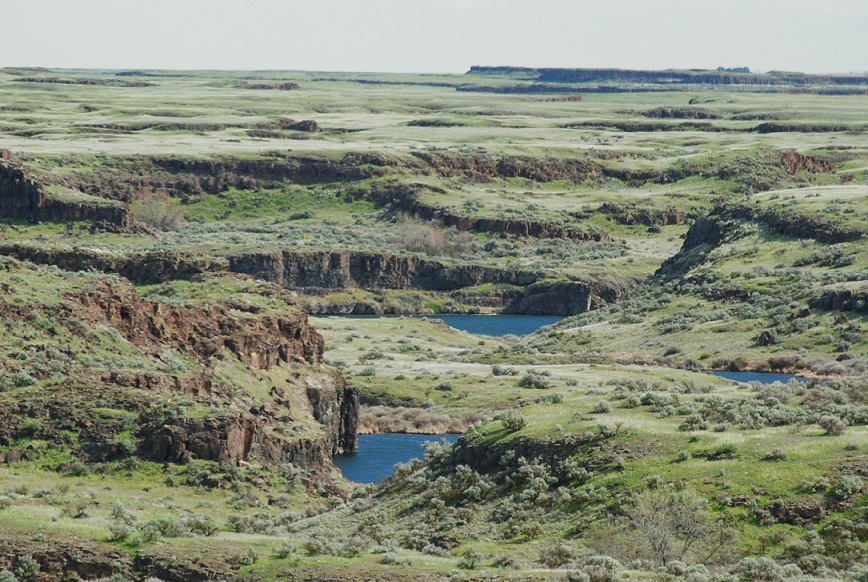
The next morning I headed to the Columbia National Wildlife Refuge, where I hoped to see more cranes, but really went there to see the geological wonders of the region. The refuge is an incredible landscape of high desert, or shrub-steppe as it’s called, with numerous picturesque rocky cliffs. Basalt columns lord over the hills, with sagebrush dotting the parched land.

The U.S. Fish and Wildlife Service maintains habitat for the cranes, keeping water levels low so that the birds have a safe place to roost. They prefer rather shallow ponds and lakes. A FWS staffer, who was set up at a refuge overlook with a scope on the birds, told me that cranes’ biggest predator is the coyote, and the birds will spend the night in the water, away from any access of predators. The cranes like to have an open view, and the surrounding area should be free of hiding places for predators, such as woods and shrubs. I appreciated the view from the scope, though it was hard to keep a focus with the high wind gusts. What a windy day!

The refuge also provides access to an overlook of the Drumheller Channels, part of the channeled scablands of eastern Washington. It’s hard to appreciate the amazing aspects of the area from the ground. I suspect the best views are from the air. But I was happy to see part of the area I had read about.

I left the refuge and drove on to find another area further south that my guidebook said was favored by cranes. The roads are laid out pretty much in grids and I was able to find the road easily. I began to see some cranes, so pulled over and parked. I saw only one other car further down. I watched as small groups of cranes circled around. There were a few others on the ground at a distance. I decided to hang out for a while, and eat my lunch there. The sun was out, though it was windy.

As I was finishing my sandwich, I looked to my right and happened to see a cloud of cranes. I leapt up, grabbed my camera and was out of the car. Birds were swirling around, with groups passing under others. They made abstract patterns against the sky. They flew left and they flew right. Some landed. Others kept coming in from the east. The trumpeting calls announced their arrivals. They sounded so joyous, like they were all coming to a great family reunion. “We’re here,” they seemed to shout. “We’re coming.” I watched the spectacle for about a half hour. There were only a couple other cars by then, and I considered myself lucky to be there at the right time. I don’t know how many cranes were gathering there, thousands I’m sure. I watched until the strings of birds finally seemed to end.

What a great sendoff for me. I was ready to head home now. After I returned, I did a little research and was saddened to learn that many states allow hunting of Sandhill Cranes. I thought it was illegal to hunt cranes. I know Whoopers are protected, but I assumed so were Sandhills. These magnificent birds should be appreciated alive, in the air, not as stuffed trophies. What kind of thrill can it be to shoot one of these graceful birds out of the sky and then admire the dead creature in hand? At least there are refuges and communities in which to see these magnificent birds.

At Columbia NWR. Can you find the cranes?
Cranes near Othello

DSC_0810DSC_0814

Western Painted Turtle

DSC_0818

Can you find the cranes?

DSC_0828

Drumheller Channels
Drumheller Channels

DSC_0833DSC_0858DSC_0868 - CopyDSC_0871 - CopyDSC_0867DSC_0874

Here’s a good site to hear the crane’s calls: http://www.allaboutbirds.org/guide/sandhill_crane/sounds

The Picking of the Kale

March should be called “hump month.” It straddles winter and spring. It has a little of everything. Winter’s cold hand is still on our shoulders, but spring’s warm breath is in our nostrils.

But more than that, my kale lets me know that the season is changing over. It’s time to give last season’s crop the heave-ho and get ready for this season’s vegetable garden. All winter my kale provided me with enough leaves for dinner, whenever I wanted it.

Today I noticed that all my plants were starting to go to seed, so, time to pick it all! There was more than I thought. I started to pick the small, tender leaves and quickly realized I would have to make several trips to the kitchen to deposit my haul. I’ll leave the plants standing until I’m ready to till the garden. Perhaps the flowers will please some passing bees.

kale2
Kale flower

kale1

A Beautiful Puzzle

monkey8Monkey puzzle trees live here. The first one I saw after I moved here took me by surprise. I say that because the first monkey puzzle I ever saw was in Florida, decades ago. We were at my late uncle’s house and he pointed out the strange tree with deadly sharp needles and strange seed pods that stood on the side of his house. We didn’t know what it was, but me being an amateur naturalist, I was determined to find out.

I took a sample home to DC and brought it to the National Arboretum to be identified. Soon after, I received a packet in the mail, naming the specimen Araucaria araucana, commonly known as the monkey puzzle tree. I learned that It’s an evergreen native to Chile.

But my uncle’s tree was not nearly as large and grand as the monkey puzzles I’ve seen here in Seattle. What are so many doing here in sight of Puget Sound? As I drive around the city, my eye easily spots them, standing very tall and lovely in front yards. The arrangement of the lance-like needles around the branches gives it a distinct profile, similar to the way a gingko has a unique look. It must have been trendy at one time, to plant these exotic trees in such a place far from their native land.

No squirrel, bird or monkey, for that matter, could possibly perch on a monkey puzzle branch. Not without getting a sharp poke in the butt. And surely no monkey puzzle owner dares go barefoot where the tree grows. It’s not native, provides no shelter or food for wildlife, and is one big prickly hazard. Its only value can be decorative, which is completely acceptable. Seattleites are fierce native plant advocates, but we are also passionate gardeners, susceptible to the sirens of purely decorative specimens.

The monkey puzzles have claimed their place in the land of evergreens. I wonder whether, in turn, Chileans are enjoying exotic Douglas, Grand or Noble firs in their yards?

monkey2
Monkey puzzle in Seattle

monkey3monkey4

monkey7 monkey10monkey9monkey1